


EXCLUSIVE: Luisao reveals his favourite team and criticises UEFA over Vini Jr. case
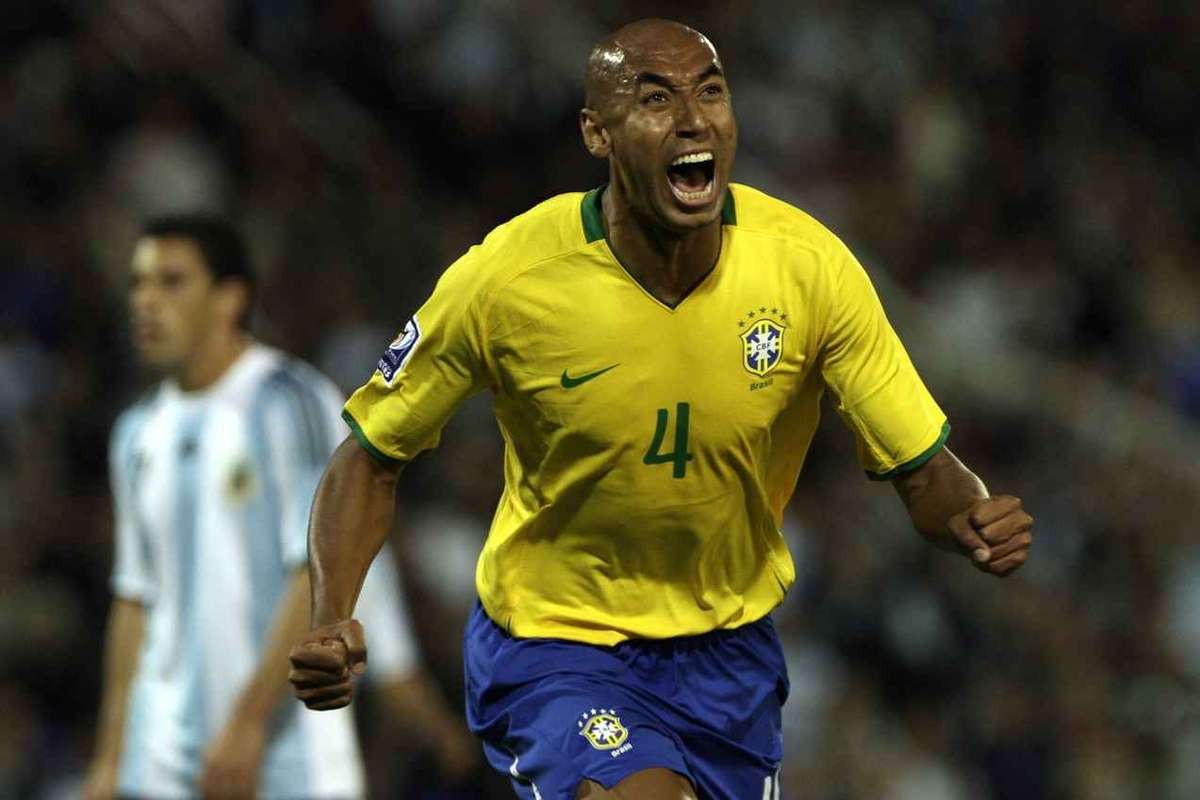
Luisao secured the triple crown with Cruzeiro back in 2003, featured in the 2006 and 2010 World Cups, and created a lasting legacy at Benfica.
He dedicated 15 straight seasons to the Portuguese outfit, emerging as the player with the highest number of titles in the clubs history for the Encarnados, with 20 trophies, and the captain who donned the teams jersey more times than anyone, exceeding 500 appearances.
The Brazilian also claimed the 2004 Copa America alongside the Selecao, netting a goal in the final versus Argentina, plus two Confederations Cups in 2005 and 2009. Now 45 years old, Luisao serves as a commentator for ESPN networks.
Flashscore: What factors do you credit for your remarkable staying power at Benfica? Did you ever feel drawn to switch teams?
Luisao: "Each year, or every couple of years, proposals arrived from various clubs. I credit my extended tenure to the clubs president then, Luis Filipe Vieira, who always turned them down. For instance, there was a bid from Juventus, and I truly admired Juventus since Italian football hones defensive skills so well."
"I approached the president about it, but he dismissed the idea outright, laughing, and insisted he had no interest in letting me go. He regarded me as a dependable figure who helped new signings settle and develop. Yet offers kept coming.
"Take Camacho, a Spanish manager who departed us, he aimed to bring me to Real Madrid, but the president blocked it. Quique Flores, another coach we had, later moved to Atletico Madrid and contacted me near the 2010 World Cup to join him, yet again the president refused. Still, I remained content, focused on building a lasting impact."
Which coach stood out as the finest you collaborated with?
"For me, Jorge Jesus topped the list. If you are interested, let me share a tale from his early days. Upon arriving, he summoned me to the lounge and declared, 'If I were managing elsewhere and they suggested signing you, I would decline'. He continued, 'Now, I will show you the proper way to play'.
"Those words stuck with me. I drove home thinking, 'He delivered it with such conviction that I will follow his guidance completely'.
"In our debut match under him, I barely exerted myself. He introduced a defensive strategy where the backline stayed aligned, with players covering for each other seamlessly, reducing reliance on the forwards...
"He often repeated in sessions, 'If the lights ever fail, my squad should perform in darkness, knowing each others roles instinctively'. And indeed, that held true."
Did Jesus excel tactically, or in every aspect?
"Primarily in tactics, though he struggles with the personal dynamics of players. Away from the field, he connects well with people, but during games, he can be quite stern, speaking in Portuguese of course, in his approach to athletes. Off the pitch however, he possesses a generous spirit."
Does this harshness hinder his squads?
"It affects the youngsters, certainly. For veterans like myself and others with experience, we managed it fine. But for the young ones, he applied intense pressure. His vigorous communication style created a heavy burden on them."
Do you hold a unique fondness for Luiz Felipe Scolari since he elevated you to the pros?
"Absolutely, it is profound, stemming from a particular training episode where his assistant, Murtosa, called fouls on my every touch. It felt endless, like every breath was a foul... I snapped and told him to 'grab some nuts'. He ejected me from the session immediately. I phoned my father, saying, 'Dad, it is finished, no chance now'.
"The following day, returning to train, my gear was gone from the youth locker room. Then Uncle Dassio, the youth director, informed me, 'Did no one mention? You are to join the senior squad'.
"I dashed from the youth field to the pros like Usain Bolt. Entering the locker area, Felipao delivered a humility lesson that resonates to this day.
"I exited his office in tears, as his words deeply affected me. He explained that acting out like that, cursing an assistant, would prevent any success in football. I took it to heart, applying humility throughout my life. I never let success go to my head after that talk with Felipao, so he occupies a cherished spot in my heart."
You lately supported Vini Jr. in the incident involving Prestianni. Was it challenging to choose sides given he played for Benfica?
"I am fully certain I made the right call. It proved difficult since it involved my old club. However, I never opposed the club itself. My issue was solely with the incident.
"It stung receiving attacks from every direction on social media, even from insiders wrongly doubting my integrity, but I take pride in my parents upbringing. I need not appease fans or stay neutral just because I spent 15 years playing and 26 as a director at Benfica."
Why does Vini Jr. stand as the leading voice against racism in football currently?
"Vini faces multiple prejudices. Primarily racism, but also as a black Brazilian succeeding in one of the worlds elite leagues. Admitting that proves tough for some.
"Witnessing a black Brazilian rise from obscurity to stardom on the field is challenging for many. Thus, I believe he endures dual racisms, one tied to his origins and the circumstances he navigated."
Does the UEFA sanction on Prestianni aid in fighting racism?
"Not at all. To start, it felt inadequate, almost deceptive. UEFA did not penalise Prestianni for racism, instead citing homophobia for the six match ban. It served as a cover up, ensuring issues persist and recur. UEFA avoided scrutiny by masking the graver offence of racism.
"In my view, UEFA erred. The matter required clear labelling, which it dodged to belittle our collective intelligence, that of fans, players, and all involved. I cannot endorse that."
Did Benfica supporters offer you backing too?
"Just one or two, the majority hurled insults, labelling me a monkey, a traitor, 'stay away from the club, dismantle it'. Yet the records speak volumes, right? Without boasting excessively, I rank second in appearances and first in titles. Upon arrival, Benfica languished in disarray, as you know?
"Contrasts appeared in Lisbon though. Strolling the streets, people approached saying, 'As a Benfica fan, well done on your stance. You showed courage'. Social media differs from real interactions, and across the country, genuine respect prevailed."
Do you root for any past clubs while viewing matches?
"I cherish Cruzeiro, Juventus SP, and Benfica deeply. But remarkably, in Brazil, I follow Corinthians, drawn by their outstanding supporters. I am a supporter, yet detached.
"I neither rejoice nor mourn excessively, prioritising professionalism, and at ESPN, impartiality remains key."
Is your allegiance to Corinthians innate?
"Indeed, my father backed Ponte Preta, and typically Ponte fans align with Corinthians. Once you enter professional play, that singular passion fades, replaced by loyalty to your career. So a mild affinity lingers, nothing intense."
How would you describe the World Cup experience for non professionals like us?
"It is extraordinary, utterly magical. You enter a different realm. Playing in the Brazilian league, Portuguese league, or Copa do Brasil differs vastly. The World Cup defies description.
"Beyond pride, no word fits. Thoughts race as a boy from a humble town suddenly joins Brazils elite.
"In 2006, sharing space with Cafu, Roberto Carlos, Dida, Ronaldo, Ronaldinho Gaucho replayed like a movie in my mind. Pride swells in representing your nation, aware 200 million watch and support you."
Adriano's strike came to represent Brazils 2004 Copa America triumph, yet you also netted in that final. Does that goal rank as your top?
"I contributed fully that match. Early on, I converted a penalty. Later, I scored again. Then, covering for Julio Cesar on a cross, Ayala headed it into my head, triggering a seizure. I collapsed on the field and spent time in hospital for that part."
Do you recall the head injury?
"I remember the impact, then the goal. Aside from thrashing Argentina in the Confederations Cup, it stands as my careers most vivid encounter."
Do you yearn for your playing days?
"The pressure during active play was immense, you understand? I miss aspects, but the intensity no longer appeals, as a single error can derail everything."
How did you manage the stress after conceding a penalty early in the Copa America final versus Argentina?
"Thanks to work with psychologists, I prepared for highs and lows, so upon missing, my initial thought was, 'Everyone in Brazil must be slamming me now'.
"The psychologist advised that in such moments, engage the opponent two or three times to refocus your mind on the action.
"I planned accordingly and re entered the flow. Otherwise, confidence wanes, inviting further slips. First, I pressed Tevez with physical contacts, drawing near.
"Even if the ball is distant, those interactions, jostling him, reactivate your competitive mindset."
Two years on, you featured in Brazils 2006 midfield. Why do you believe that side faltered at the German World Cup?
"Brazils performance there shone brightly. Yet we faced a formidable France, Zidane at his peak. We yielded from a set piece, where critics often fault Roberto Carlos for midfield lapses.
"Truthfully however, Roberto positioned near the box while another marked Henry.
"The contest proved fierce, and that set piece goal cost us, not any quartet dysfunction. We lost due to that dead ball situation."
Was that your careers toughest loss?
"Not quite. The 2010 World Cup stung deeper, as the era shifted and we squandered chances, potentially leading 3 0 versus Netherlands in the opening half. The 2006 group boasted seasoned winners from 2002.
"Post victory defeats ache less with experience. But generational turnover, dominating early against Netherlands yet collapsing late via errors, Felipao Melo fouling Sneijder and Julio Cesar dropping a catch, that exit after seeming victory in mere minutes hurt profoundly."
To wrap up, I will mention several clubs, and share the initial recollection that arises. Starting with Juventus da Mooca?
"Sergio Soares. I served as a linesman watching him, then later as coach, and it impressed me greatly."
Cruzeiro?
"Alex Talento, who transformed the 2003 squad."
First association with Benfica?
"The devoted Benfica supporters."
And lastly, the Brazilian national side?
"Cafu, for his unparalleled achievements and journey. Entering the team, competing in four World Cups. Many qualify, but Cafu defines that memory."