


The PSG Academy: The Meritocracy Where Players Are 'More Than Just Footballers'
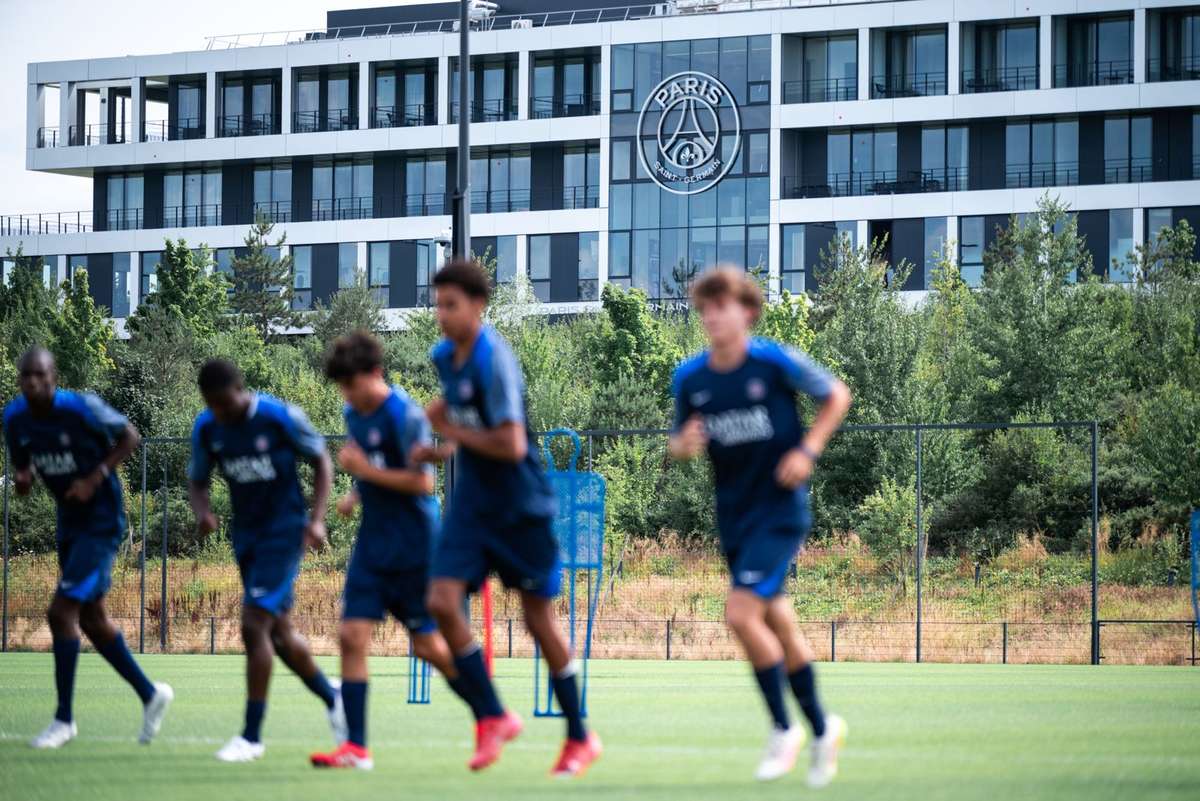
It is no secret that the path to becoming a professional footballer demands an exceptional level of dedication. To succeed, you must devote your entire life to it.
However, in 2026, more than ever, it is vital not to overlook your education. In France, youth academies strive to strike this balance. The aim is to ensure that no player, whether male or female, is left behind. Paris Saint-Germain has fully grasped this and is working to create a sustainable model that will ultimately benefit the sporting side and, in the long term, Ligue 1 and the Champions League.
"Everyone who has contributed so far can be proud of what PSG has built," said Yohan Cabaye, former midfielder and current director of PSG's youth academy, during a public address marking the 50th anniversary of the academy in November 2025.
We emphasise the triple project: sports, academics, and extracurricular activities. It is a comprehensive project. We stress it every day. Working daily is about supplying players for the first team. We must stay humble and continue working in this direction."
'More Than Just Footballers'
This June, while the 2026 FIFA World Cup is in full swing, it is a critical time for young Parisians: the baccalaureate exams. Their club is guiding them towards their first academic milestone.
"They understand that we place as much importance on academic results as on what happens on the pitch, with the coach," Cabaye explained.
"Last year, we achieved a 95% pass rate at the BAC, so we are on the right track to develop these boys. You need this academic background, because that is the image you will project in the group, on TV. It is extremely important, and we care about that."
Also read: Yohan Cabaye on Raising the Next Crop of Stars as PSG's Youth Academy Director
This message resonates with the current period. At present, around thirty teachers are supporting the 33 students taking the 2026 baccalaureate. There is little doubt that the results will be positive, continuing the trend of recent years since the creation of the PSG Campus Educational City.
The goal is to "train more than just footballers", as the club puts it. A model has been developed to bring young people together in one place to receive athletic, academic, medical, nutritional, and educational support. Pedagogy is at the heart of the values promoted, enabling students to succeed.
To this end, they are guided along various pathways that help them learn more than just football.
By the end of their programme, they become true citizens, already able to plan for life after their playing careers, to be aware of "prevention and public health issues," and to develop a solid cultural foundation.
All that remains is to demonstrate what they have learned during exams in philosophy, economics and management, social and economic sciences, or history and geography. Not to mention the speciality exams and the grand oral starting June 24th.
Also read: Dive Inside PSG's Performance Centre Ahead of the UEFA Youth League Semifinals
Becoming a Pro at PSG: An Obvious Path?
"It is ongoing work; we communicate a lot with the teaching team," said Ms Tarhoui, a teacher at the PSG Academy.
"We also have the support of Ms Guerinel, Mr Trouchon, the CPE, and Mr Rahoui, the Director of Education. We organise many meetings and educational councils to exchange ideas and create the best resources to make school life a bit easier for our students."
And it seems that this educational collaboration is going very well, says goalkeeper Jade Dubois, who has been with Paris Saint-Germain since 2023.
"In terms of academics, we are very well supported. Since our class sizes are small, it helps a lot. Sometimes, there are just two of us in class with the teacher, which allows us to be much more efficient and to benefit from personalised support," Dubois said.
Now, the connection with current sporting events is clear. Beyond the success of some young players trained at the club who have made it to the first team, such as Warren Zaïre-Emery, Senny Mayulu, Ibrahim Mbaye and Quentin Ndjantou.
But looking deeper, the 2025-2026 season has also been a success for the academy. The players trained there helped PSG win the Coupe Gambardella, the French Under-18 Cup, for the first time since 1991. In addition, the U19 and U17 teams were crowned French champions.
Finally, let us not forget that the Under-19s reached the UEFA Youth League semifinals after a very impressive run in the 2025-26 season. The goal is to do even better next season, and it is a collective effort within the PSG Campus.
All these factors point in the same direction: the future of these young players lies within the club. Becoming a professional footballer is now more tangible than ever. Paris Saint-Germain is determined to secure its young talents. It was in this context that many youngsters received contract offers in November 2025.
Meritocracy is at the heart of the discussion, and financial recognition clearly goes hand in hand with sporting success. Recently, several career choices have shown that trying your luck elsewhere is not always a guarantee. Ibrahima Diaby (Cercle Bruges), Mahamadou Sangaré (Manchester City), Axel Tape (Bayer Leverkusen) and Étienne Michut (Rio Ave) have, for now, not succeeded in their gamble.
That is part of the unpredictability of a youth academy. For Paris Saint-Germain, the stakes are high, and the project is built for the long term.