


EXCLUSIVE: Glenn Stromberg shares his views on Sweden, World Cup favourites and Italia '90 memories
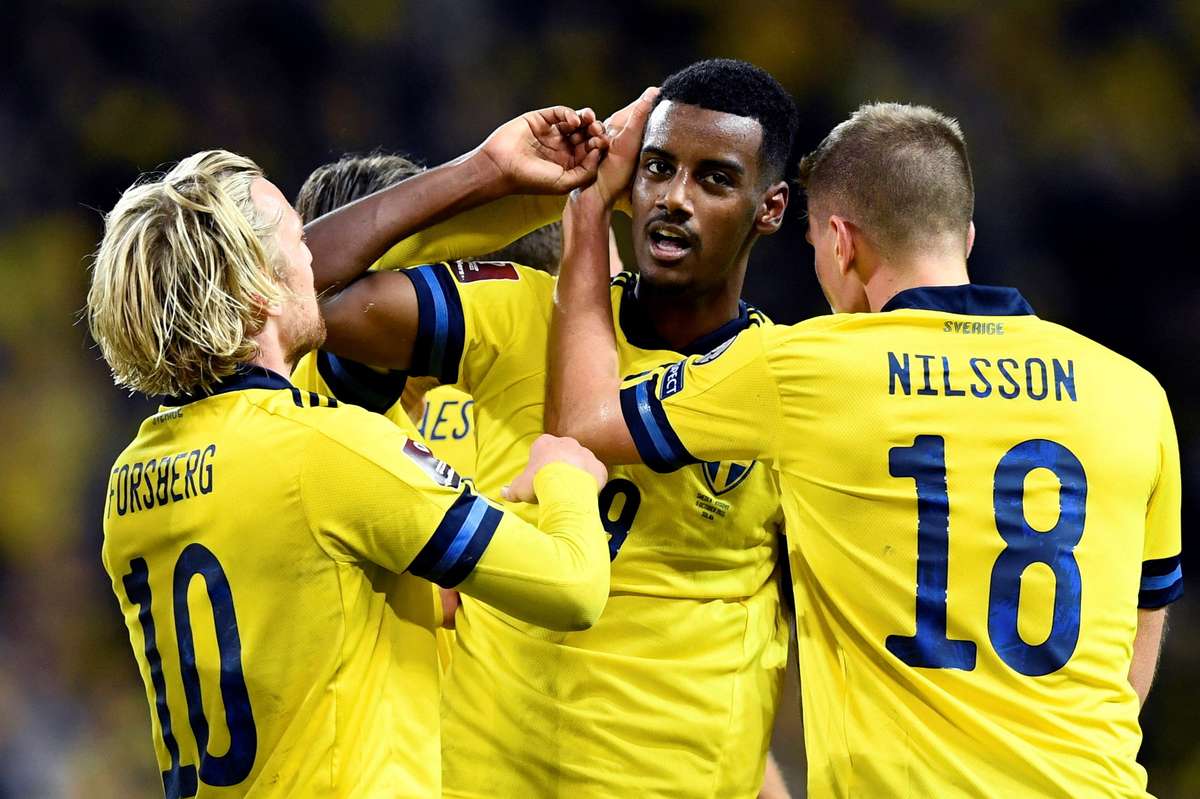
In order to examine the prospects of the Swedish team, the hierarchy among the top favourites and to revisit the evenings of Italia '90, Flashscore had an exclusive conversation with Glenn Stromberg, a Swedish football legend who now works as a television pundit.
Sweden are preparing for the World Cup. What sort of tournament do you anticipate, considering they secured their place with some debate via the Nations League instead of the traditional qualifying path?
'In my personal view, simply being able to participate should be seen as pure delight. We are discussing a side that failed to win a single match in the two years before the play-offs; they earned that berth by winning Nations League League C. Even in that competition, everything went extremely well: the difficult scenario with Ukraine, followed by the home fixture against Poland, where they were the superior team, but we managed to score a goal in the 90th minute.
It almost feels as if it was destined, because there is no evidence that Sweden have made some remarkable turnaround in recent months. They appointed a good manager in Graham Potter, but he cannot perform miracles. A great deal will obviously depend on Alexander Isak and Viktor Gyokeres: they compete at a high standard in Europe and, if they are fit and in form, then we shall see.'
What are your thoughts on the group stage rivals? Tunisia, Japan and the Netherlands: what sort of group does that represent?
'It is an extremely difficult group, not simply moderately so. The Netherlands enjoyed an outstanding qualifying campaign, despite Ronald Koeman encountering numerous minor injury issues along the way, similar to Sweden, but on paper they are still the strongest side. Tunisia may not have the outstanding players they used to have in European leagues, but as a collective they operate effectively.
However, in my opinion the strongest side in the group is Japan. People frequently remark at World Cups that Japan are respectable but never quite manage to get the job done; yet now they play a frightening style of football, akin to Brazil or England, with remarkable results away from home. They possess a squad that functions well in every area. I believe each team in this group feels they have a decent chance of progressing, given how many teams qualify.'
Sweden are expected to base much of their play around their two forwards. Do you believe the lack of a player such as Dejan Kulusevski will be noticeable?
'Yes, undoubtedly. He was the captain and the focal point, a player who came through the ranks at Atalanta, then went on to experience the world and became a crucial figure for the national side. However, the squad has grown accustomed to playing without him for a year, so on the field his absence will not be as strongly felt, even though having him would have been a massive benefit. We do have speed in Anthony Elanga and Taha Ali, who performed well in the last match and are very intriguing players.
Sweden must adopt a certain approach: they cannot think about dominating matches or playing out from the back. They need to return to being solid in defence, as in my playing days: 'granite at the back'. If we are well organised and strong defensively, then up front we have players like Gyokeres and Isak who can score at the first opportunity and change a game. At present, the team is neither stable nor confident; the manager is experimenting with a back five to offer more safety, and it is going reasonably well but not spectacularly. Having collected only two points in a weak group, going to the World Cup ought to give them tremendous determination.'
Expanding the conversation, which sides do you believe appear strongest for this World Cup?
'At my sixteenth tournament across World Cups and European Championships as a pundit, I consistently say the same thing: what is important is which side arrives with their attack in the best condition and free from injuries. In 1982, the smaller nations did not know how to maintain their tactical shape compared to European or South American teams; nowadays, everyone knows how to organise themselves and defend effectively. So individual quality becomes critical, the player who can decide a match.
The team that has the top scorer will probably make it to the final or the semi-finals. That is why you cannot discount France among the favourites, because they have remarkable attacking depth; the manager can manage players' fitness after a long season and rotate them without sacrificing quality. England are also very strong; Tuchel is a coach who demands a lot and knows how to motivate the group. Then there is Spain and the South American sides, who always perform well at World Cups. Brazil, now under Ancelotti, remain at the very highest level if the players heed his instructions. And finally Germany: they are proud, difficult to beat and never get distracted by internal matters during a tournament.'
On the other hand, who might be a dark horse?
'I have been hearing this question for 30 years. A surprise side can reach the quarter-finals, as was the case in 2002, but winning the entire tournament is difficult. A lack of experience at that level comes into play, along with the pressure: if you face Brazil, they know the entire nation will crucify them if they are eliminated, and that places the opponent in a tough spot. Perhaps a sense of satisfaction for having performed well up to that stage also creeps in. In 30 years, I have never witnessed a genuine surprise win the whole thing.'
You were part of the Italia '90 World Cup. What recollections do you have of that experience, and what significance does it hold for a footballer to take part in one?
'It was marvellous, particularly for me because I was playing in Italy. However, it was an odd experience because the head coach, Olle Nordin, relegated me to the bench. The peculiar thing is that I had also played alongside Nordin when we were at Goteborg, so we knew each other well. But he believed I had become 'too Italian': he perceived me as more stationary in midfield, simply receiving the ball, whereas he wanted me to use my running to get in behind, as I used to do years earlier. In my stead he preferred to pick Klas Ingesson, who was at Bari, and who sadly passed away far too young.
I recall the first press conference with journalists from La Gazzetta or Lo Stadio. They asked Nordin: 'You reached the final in 1958, but apart from that, not much. Do you think you have a chance?'. He became very angry and refused to answer. Then the Italian journalists, who had watched me play for six years at Atalanta against the biggest names in the game, posed a shrewd question to him: 'If you say you are not favourites, yet you have Glenn Stromberg on the bench, a great captain wanted by the leading Italian clubs, that means you have ten players better than him. So why are you not going to win the World Cup?'. Nordin had absolutely no idea how to respond.'
And how did the tournament actually unfold on the field for Sweden?
'We were utterly terrible. We lost all three matches by the same score, 2-1. The one against Costa Rica was dramatic; in the closing minutes, I was desperate and wanted to take the ball and do everything on my own. It was a match that, if we played it a hundred times, we would probably lose it only once, but it happened to us.'
Is there a specific anecdote about Swedish supporters from that era?
'Yes, something unusual happened. After a week in the training camp, we spotted fifty or a hundred Swedes outside our hotel with flags and camper vans. We had never seen anything like it on national team away trips, and we were almost worried that some catastrophe had occurred back in Sweden.
Back then, there was no internet or any means of finding out. So we phoned home to check if everything was all right! They told us nothing had happened, that everything was fine. In the end, we realised those people had simply decided to follow the World Cup and, at the same time, enjoy a holiday in Italy with their camper vans. From that moment, the boom began: in 2006, in Berlin, there were 100,000 Swedes. Today, Sweden is one of the nations that brings the most supporters to international tournaments.'
From the genuine bewilderment at those first camper vans parked outside the hotel in Italy, to the yellow floods that now fill squares and stadiums around the world, Sweden have forged a visceral and vibrant connection with the World Cup. Glenn Stromberg has shared his sharp tactical analysis and these wonderful stories exclusively with Flashscore. With his wealth of experience and the charisma that has always distinguished him, he has reminded us once again why the World Cup is, and will always be, the most captivating tournament of all. Now, the ball rests at the feet of the pitch.