


Top Mexican officials promise World Cup safety after tourist shot at ancient pyramids
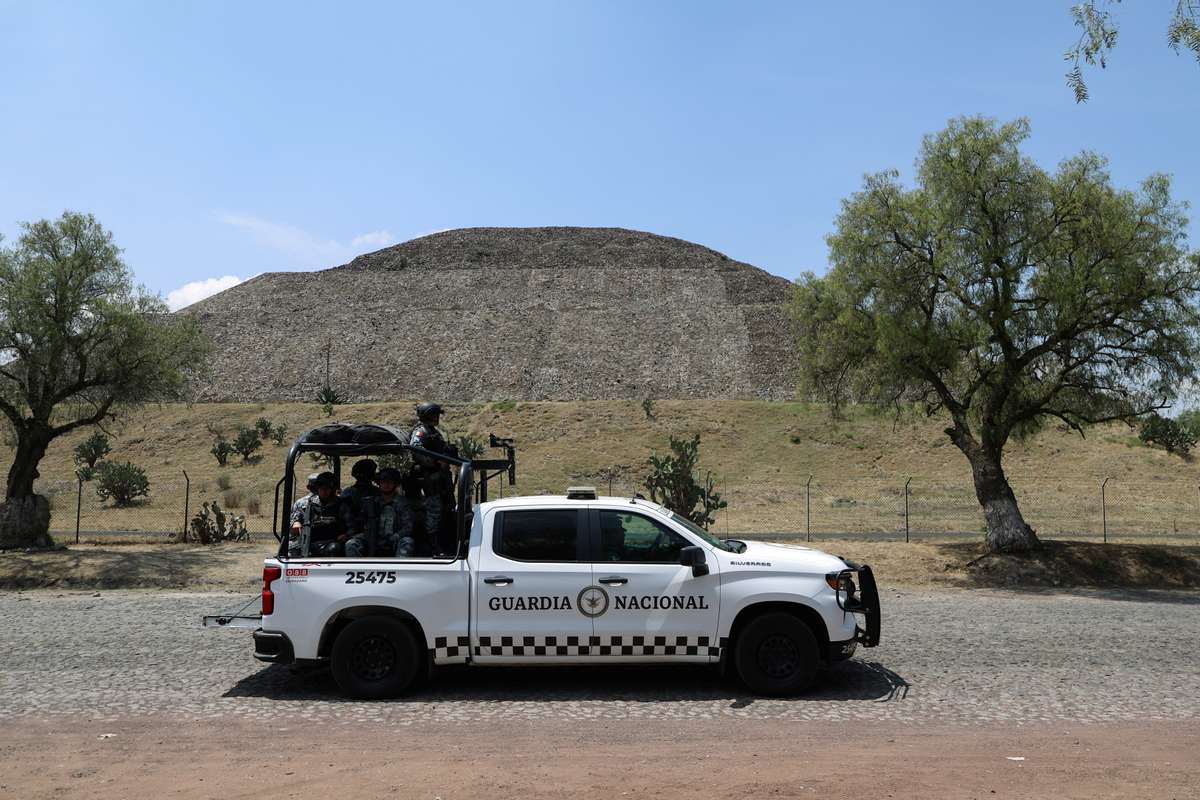
A 27-year-old individual armed with a firearm and a blade concealed in his rucksack triggered widespread alarm by discharging shots from the summit of a pyramid in the extensive Teotihuacan site, a major draw for visitors in Mexico, according to authorities. He subsequently ended his own life.
Authorities in Mexico stated that he operated solo, releasing 14 rounds towards the targets and members of the National Guard military police.
Literature about acts of violence
Items found on him included references to the 1999 Columbine school shooting in Colorado and showed signs of psychopathic tendencies, explained Luis Cervantes, the attorney general for the State of Mexico, where Teotihuacan is located.
"Among his belongings, authorities also found ... literature, images and documents allegedly related to acts of violence that ... may have occurred in the United States in April 1999," he noted during the president's regular media briefing. Cervantes further mentioned that the incident seemed premeditated, with the perpetrator having frequented Teotihuacan, roughly 50 kilometres (31 miles) northeast of Mexico City, on multiple prior occasions. Besides the weapon, he had a plastic container holding 52 unfired .38 Special calibre bullets. "This act was not spontaneous," Cervantes declared.
An eyewitness tourist shared with Reuters that those present also overheard the assailant refer to Columbine, a infamous mass shooting in American history often cited as influencing subsequent perpetrators.
Another observer of the event expressed concern over a potentially larger casualty count.
"He was firing and firing and firing and the bullets were making different sounds," Barak Hardley, a visitor from Los Angeles, recounted to Reuters.
"I do not know why he stopped with one person. Thank God he did."
Tightened security measures for tourist sites
On Monday, Mexico's security cabinet reported that 13 individuals sustained injuries, among them a 13-year-old and a 6-year-old, originating from Canada, the United States, Colombia, Russia, Brazil, and the Netherlands. Seven victims received bullet injuries, Cervantes supplemented on Tuesday.
"The state's response was immediate and forceful," Security Minister Omar Garcia Harfuch informed journalists, noting that enforcement agencies plan to enhance protection at historical ruins and leading tourist destinations.
Teotihuacan, featuring grand pyramids and shrines initially inhabited from 100 B.C. to 500 A.D. and eventually controlled by the Aztecs, drew 1.8 million visitors in the previous year, per Mexico's tourism department.
The valued location will resume operations on Wednesday under bolstered safeguards, announced President Claudia Sheinbaum.
She reaffirmed Mexico's commitments to security for the globe's premier football tournament, commencing on June 11 in Mexico City with subsequent games in other key Mexican urban areas, and revealed on Monday her consultation with FIFA personnel, the event's coordinators, regarding arrangements.
"We all know we had never seen anything like this in Mexico," she remarked. "From what prosecutors have indicated, this person showed signs of psychological problems and was influenced by incidents that had occurred abroad."
Sheinbaum had previously encountered inquiries on security for the World Cup following the apprehension and demise of drug lord El Mencho in March, which ignited violent clashes across multiple areas of the nation.