


Exclusive: Robert Huth reflects on winning the Premier League with Leicester and Germany's World Cup prospects
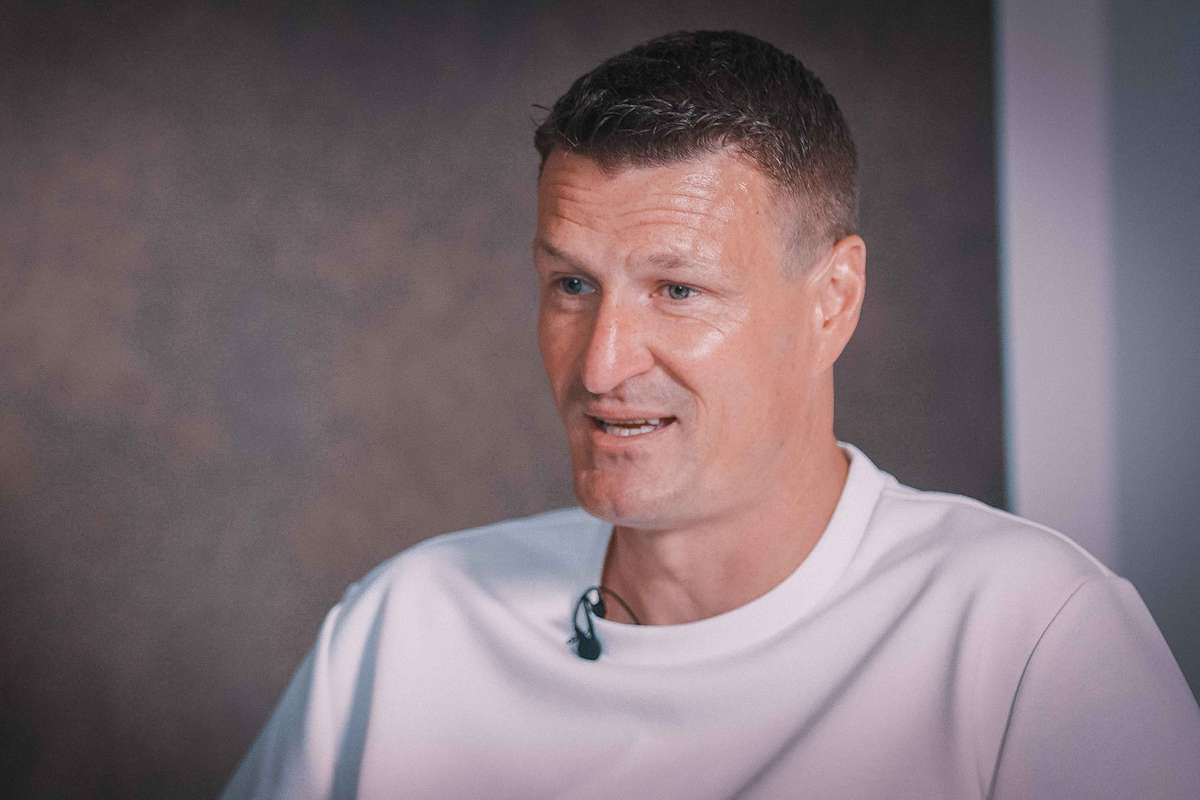
Flashscore: It is a pleasure to chat with you today. I would like to begin by asking about Leicester City. It has been roughly a decade since you won the Premier League with them, and now they have been relegated to League One. From an outsider's perspective, how does that affect you? What is your interpretation of their decline, and what are your general thoughts on the club's current state?
Robert Huth: "The overriding emotion is disappointment, to be honest. A decade ago, Leicester were a club admired for their recruitment and smart buying and selling of players. That approach appears to have been abandoned in the past two or three years. It is disheartening to see them drop into League One, but it demonstrates that missing a transfer window or two can seriously work against you in football."
Reflecting on that remarkable Leicester side, what was running through your mind during that title-winning campaign? Did you ever genuinely believe you could win the title, or was it more about taking each match as it came? And what sort of messages did Claudio Ranieri convey to the squad?
Robert Huth: "To be honest, winning the league was never on our minds, particularly having only just avoided relegation the previous season. Initially, the objective was simply to stay in the Premier League. We secured our safety quite early, before the turn of the year in fact, so we had to reassess our targets. But there was never a dramatic change in mentality; we always took it game by game. Claudio was excellent at keeping us focused on the task at hand. In sport, you cannot look too far ahead, and he ensured we didn't. Naturally, as humans, you cannot help but let your mind wander, but we remained grounded thanks to his leadership."
When that Leicester team is discussed, the focus is often on attackers such as Riyad Mahrez, Jamie Vardy, or even N'Golo Kante in midfield. However, a significant part of the team's success was founded on a solid defence, particularly your partnership with Wes Morgan. What was it like playing alongside him, and what made you two such an effective defensive duo?
Robert Huth: "Communication played a massive role. Both Wes and I enjoyed talking, keeping those around us organised and ensuring we were not exposed in open play. But a key strength of the entire team was that everyone attacked and defended as a unit. Even those attacking players you mentioned worked exceptionally hard to maintain defensive solidity when we did not have the ball. Claudio really emphasised that as a crucial message. It is easy to place all the responsibility on defenders, but if the players ahead of you are not working, it becomes nearly impossible. Our team balance was crucial, and that is why we had such an impressive defensive record."
Do you see similarities with your time at Chelsea? You played with big leaders and characters there, under Mourinho, with John Terry, Ricardo Carvalho, Frank Lampard and others. Was there a similar sense of unity and work ethic?
Robert Huth: "Definitely, especially in terms of work rate and defensive setup. Under Jose, everyone was defensively minded; even someone like Didier Drogba would press incredibly hard from the front. But if you compare the teams player by player, Chelsea had a squad of world-class superstars, some of the best in their positions. That level of quality certainly helps, and it wasn't easy for me to break into the side, but it was also a big learning experience. The discipline, work ethic, and focus on every game really shaped me as a young player."
Speaking of learning, what was it like to play under Mourinho as a young player? And how did leaders like John Terry influence your development?
Robert Huth: "A lot of it was very visual, you pick up on what the other players do. For example, John Terry would be out after training doing extra work; I always liked to do extras, but never quite to his level. Another thing is the consequences of mistakes. In the youth team, you're allowed to make errors and learn, but in the first team, mistakes aren't tolerated, and if you do slip up, you hear about it quickly. Jose and the senior players set really high standards; sometimes it's not just what they say but what they do: the extra sessions, work in the gym or with the physio. These daily habits are what made that group so special as leaders. It was constant, 24/7."
Moving to your international career, how do you reflect on the 2006 World Cup in Germany? You finished third, beating Portugal after a semi-final loss to Italy. What was the experience like, particularly with all that added pressure of playing at home?
Robert Huth: "I loved every minute of it. Playing in a World Cup on home soil is such a rare opportunity, and I was very fortunate to be part of it. The support was incredible. What really set the tone was our first game. There'd been doubts after some poor friendly results, but we scored early on, Philipp Lahm put one in from 25 yards after about five minutes, and that really lifted the nation's spirits. Unfortunately, we ran into a brilliant Italian side in the semi-final, and while we could have won it, they edged it on the day. But I absolutely loved being a part of that tournament; it's just a shame we couldn't quite make the final."
Germany's last big success came at the 2014 World Cup win, but things have been more complicated since. Looking ahead to the next World Cup, what do you make of Julian Nagelsmann's team and their chances?
Robert Huth: "It's a bit mixed, really. There have been some good results recently and some disappointments, in terms of both scores and performances. The nation is a bit unsure about what to expect. In terms of the squad, I think the quality is there, as good as any team at the World Cup. But what we've missed recently is that traditional German team mentality, putting the collective ahead of individuals. Sometimes we've relied too much on individual quality and not enough on unity, which isn't typical for Germany. I think it'll be very difficult for Germany to go all the way and win it. The climate will also be challenging, with the heat not suiting the Germans, and there are some strong teams around, so in a one-off game, it could be tough."
Germany have always been known for having a clinical striker, someone like Miroslav Klose. How do you see the current situation with their forwards? Do you think there's a problem there, or do you have faith in the current options?
Robert Huth: "Individually, I don't think the quality is lacking; it's more about the style of play. When Germany have had success, the final pass was always aimed at the number nine, or crosses into the box. That's not really the case anymore; the build-up is quite slow and patient, which makes it hard for a traditional number nine to second-guess what's happening. Years ago, it was more direct, and you'd have someone like Klose or Thomas Muller running onto passes and scoring. The talent's still there - Deniz Undav, Kai Havertz now being fit again - but it's about playing to their strengths, which isn't always easy with the current style."
So would you say that the slow, patient build-up is a uniquely German problem, or is it more of a trend in football generally?
Robert Huth: "It's definitely a problem for Germany, but also an international issue. In the Premier League and other top leagues, the game can be a bit too slow for my liking lately. Since winning the 2014 World Cup, Germany as a nation hasn't really adapted or evolved; we stuck with what worked then, instead of reassessing and changing. When you look at teams like Argentina, France, or Portugal, they're more athletic, more direct, and have that extra power going forward, even if they're not just lumping the ball long. There's a lot more dynamism in those teams."
Which German players are you looking to as difference-makers in this upcoming tournament? Who really needs to step up?
Robert Huth: "I think Florian Wirtz is really important. He had a decent Euros, though he's had some trouble finding his best form consistently. Jamal Musiala is another key player, fitness permitting. On his day, he's brilliant. For me, Wirtz and Musiala are the ones who have that extra bit of skill and can make something happen for Germany. I'll be watching those two especially."