


China dreams of football glory at last... in gaming
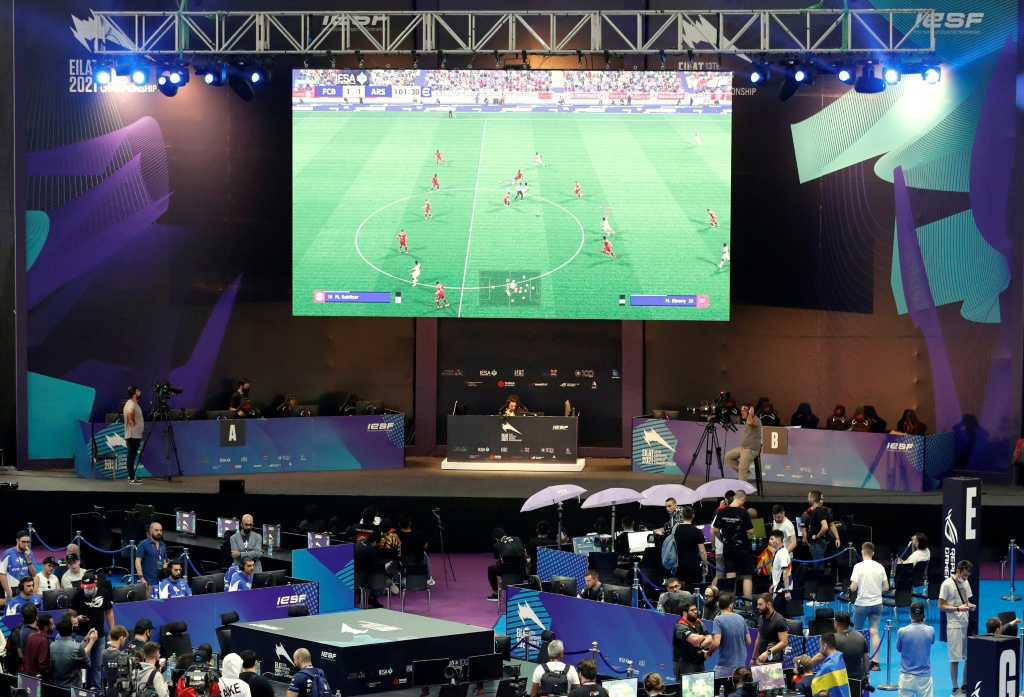
Zhao Yitang has long aspired to represent China in football, and this summer he achieved that goal, not on a real field in cleats, but via a mobile device.
With the worldwide rise of football eSports, China aims to achieve victories in the digital arena, after years of challenges in the actual sport.
The Chinese Football Association (CFA) recently revealed intentions to establish a national eSports team for football, sparking optimism among gamers such as Zhao.
"Should I get the chance to be on the national squad, I would dedicate myself completely to the team," the player shared with AFP.
At 21 and a fresh university graduate, Zhao advanced to the finals of the current "eFootball" tournament in Tokyo, securing a runner-up position.
This marked China's strongest performance yet in the competition once called Pro Evolution Soccer, which leads the football eSports sector alongside "EA Sports FC Online".
According to the CFA, the new team will participate in eSports competitions run by FIFA and the Asian Football Confederation in the near future.
Not enough money
Although real-life football enjoys huge popularity in China, the sport has been troubled by issues like match-fixing and corruption for many years.
President Xi Jinping has expressed his desire for China to host and ultimately triumph in the World Cup.
However, the men's national side sits at 93rd in FIFA rankings and once more missed qualification for the 2026 World Cup.
eSports in football might bring the success that has eluded the country.
China boasts one of the largest gaming industries globally, and its competitors excel in various eSports titles.
Yet for elite players, pursuing excellence in football simulations offers much less financial reward than competing in popular fantasy games like "League of Legends" or "Dota 2" for substantial prizes.
The professional scene for virtual football lags behind other eSports disciplines.
"The rewards are insufficient. Earning a full-time income from professional play is challenging," said ex-professional eSports footballer Monaco, who preferred his online alias to dodge harassment.
He noted that even dominating every event would yield roughly 70,000 RMB ($9,800) per year pre-tax for a leading player, with no steady paychecks available.
In comparison, stars in mature eSports such as League of Legends command multi-million salaries plus endorsements.
"Across China, perhaps just 10 individuals can sustain themselves solely through football eSports," explained Pan Shuyin, head of eSports for Chinese Super League outfit Changchun Yatai.
Teacher Ding
Changchun seeks to distinguish itself in this area.
"We stand as the sole club in the Chinese Super League, and possibly in China, steadily funding eSports initiatives," Pan informed AFP.
Many other teams have dissolved their eSports units or hesitate to form them, viewing them as unprofitable.
A factor in the reduced visibility and market appeal of football eSports stems from the elevated entry barrier.
Pan, whose team targets younger audiences via eSports, pointed out that it demands familiarity with actual football.
Chinese squads have competed in international football eSports before, but the nation lacks a spot in the forthcoming FIFAe World Cup, an "eFootball" event set for December in Saudi Arabia.
On a global scale, football eSports is gaining routine status.
The ePremier League began in 2018, and eSports encompassing football featured as a medal discipline at the 2023 Asian Games.
Zhao, known as "Ding" or "Teacher Ding" in the football eSports circle, discovered a football game in 2018 to relax amid studies and physical football sessions.
"Watching numerous real matches or participating in real play builds your insight into succeeding in eSports," he remarked.