


Can the Heat Be Managed? Intense Temperatures Hanging Over 2026 World Cup
With fewer than six months until the 2026 World Cup begins, organisers are preparing for what might prove to be their toughest adversary: scorching heat.
Rising temperatures throughout the United States, Mexico and Canada create safety concerns for athletes and supporters, along with numerous logistical challenges that are still unresolved.
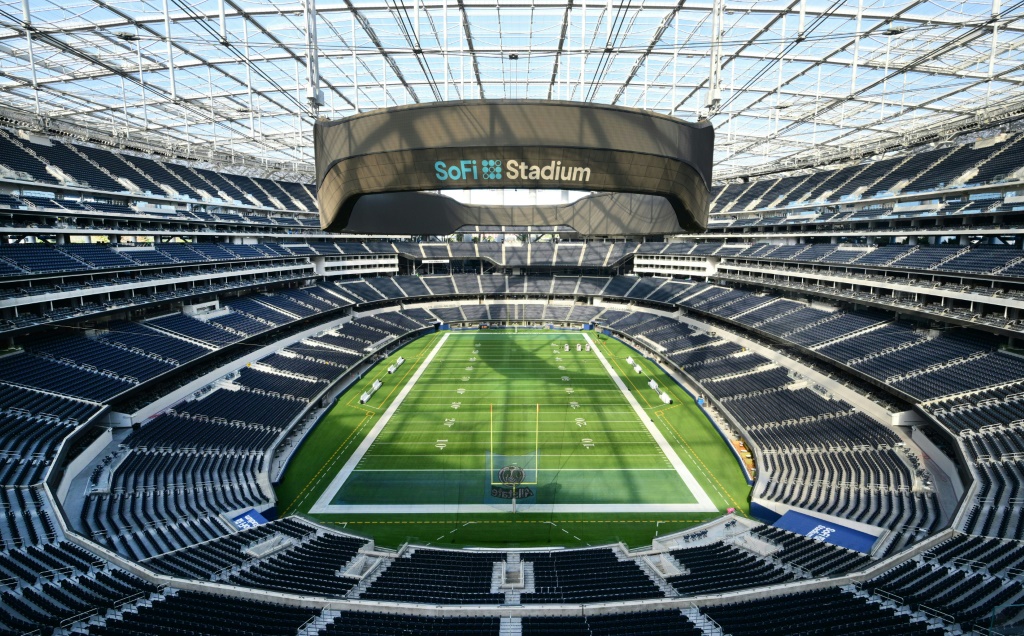
In the heart of the 5.5 billion dollar SoFi Stadium in Los Angeles, which will stage eight World Cup fixtures, about 15 industrial misting fans over two metres tall are kept in storage, ready for use. Should temperatures exceed 80F (26.7C), these fans will be positioned around the venue.
A roof hanging roughly 45 metres over the SoFi Stadium field provides partial shade for viewers, while wide vents on the sides of the stadium permit winds from the adjacent Pacific Ocean to act as a natural cooling system.
"Realising that you can fit 70,000 individuals into a structure, the vitality, the thrill, the movement that accompanies it, and the elevated warmth, that is where we aim to ensure we act accordingly," Otto Benedict, vice president of operations for the firm overseeing the stadium, stated to AFP.
Not every one of the World Cup's 16 venues is so contemporary. Moreover, Southern California does not rank among the most vulnerable locations for an event planned from 11 June to 19 July, three and a half years following a winter World Cup in Qatar.
Mandatory cooling pauses
A report issued in the International Journal of Biometeorology in January raised "grave worries" regarding the wellbeing of players and referees at the 2026 World Cup owing to severe heat.
The analysis pinpointed six "high-risk" host cities: Monterrey, Miami, Kansas City, Boston, New York and Philadelphia.
The "Pitches in Peril" document from the Football for Future charity indicated that in 2025, each of those cities experienced at least one day surpassing 35C on the wet-bulb globe temperature (WBGT) scale, which accounts for humidity and represents the peak limit of human heat endurance.
Heat was a major topic at this year's FIFA Club World Cup in the United States, which prompted grievances from players and managers.
Intense heat also characterised the 1994 World Cup, the previous men's tournament hosted in the United States.
FIFA has reacted by requiring cooling pauses during the 22nd and 67th minutes of every match at the World Cup, irrespective of the weather.
The World Cup fixture list unveiled after December's draw in Washington allocates daytime games mainly to climate-controlled arenas in Dallas, Houston and Atlanta, whereas more hazardous sites are slated for evening starts.
"It is evident that there has been an attempt to synchronise the tournament timetable and venue choices with the issues surrounding athlete welfare, but also athlete output," a representative for the FIFPro players union remarked to AFP. "This represents a definite result, which we appreciate, and a insight gained from the Club World Cup."
High-risk fixtures
FIFPRO asserts that the primary lesson is that heat will assume a more pivotal position in arranging events on a planet that is warming.
The union contends, however, that various World Cup games continue to be "high-risk" and suggests delays whenever WBGT levels go beyond 28C.
Among the games raising FIFPro alarms: group-stage encounters timetabled for mid-afternoon in New York, Boston and Philadelphia, plus the final, planned for a 3:00 p.m. start in New York.
Although squads and athletes strive to counteract the impacts of the environment, certain experts claim that the dangers to audiences both within arenas and at fan zones have been undervalued.
"There exists a hazard and crucially, we believe it to be an overlooked hazard," explained Chris Fuhrmann, deputy director of the Southeast Regional Center of the US National Oceanic and Atmospheric Administration.
"While you are shouting, you are in fact producing considerable metabolic heat and your pulse rate is rising. Supporters, in contrast to elite sportspeople, are typically not in comparable physical condition.
"They possess numerous coexisting conditions that heighten the chance of an adverse health result or falling victim to heat strain."
Arena temperatures are further intensified by the "urban heat island" phenomenon from concrete, tarmac and steel.
Sufficient airflow, abundant shaded zones and availability of fluids are essential, according to Fuhrmann, even if fluid intake is frequently hampered by alcohol use.
FIFA has not yet specified if supporters may carry reusable water bottles into sites or if water will be available for purchase within. FIFA offered no reply to comment requests.
Precautionary measures
For National Weather Service meteorologist Benjamin Schott, who has counselled FIFA and its World Cup working group, the focus is on avoidance, especially for international guests unacquainted with regional weather patterns.
A further insight from the Club World Cup, he noted, concerns the necessity for communications in multiple languages to guarantee that heat-safety alerts are fully comprehended.
"The key learning is simply endeavouring to perhaps more effectively inform fans as they arrive in the United States with a stronger grasp of what the climate might resemble over those two months," Schott commented.