


EXCLUSIVE: Former West Ham & Croatia player Stimac on managing Zrinjski, Igor Tudor & more
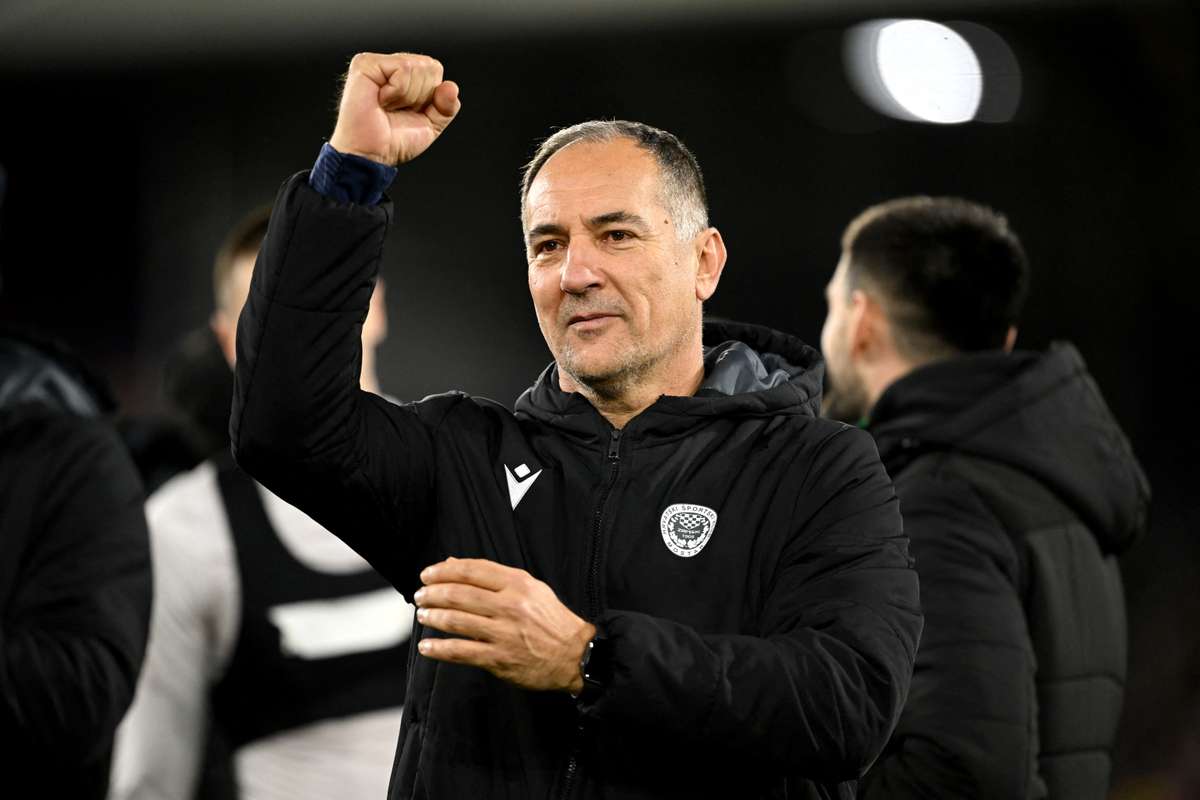
From his residence in Bosnia, Stimac speaks candidly about his Zrinjski Mostar team's triumph against fierce opponents Velez Mostar, a result that maintained their position in the WWIN Liga championship contention.
'Securing victories in matches like these requires far more than simply possessing skill on the field, as we once more, this season, faced what amounted to 14 opponents during the game,' Stimac stated, alluding to his perception of biased refereeing.
The campaign has already proven fruitful for Stimac and Zrinjski. The ex-Croatian representative, who secured a bronze medal with his country at the 1998 World Cup, assumed the position last summer and led the squad through the Conference League group stage, ultimately exiting against Crystal Palace in the knockout playoff.
This signified a comeback to club coaching for Stimac following an eight-year hiatus. He appears to have favoured unconventional routes, including a five-year stint as India's national team manager from 2019 to 2024, and prior roles in Iran and Qatar.
When questioned on his choice to join Mostar, he observed: 'I felt the absence of my profession, the work I cherished.'
'The opportunity arrived precisely when I was free. Naturally, it differed greatly from my previous five and a half years with the Indian national side.'
'It represents an entirely distinct role since it involves daily involvement; you engage with the athletes, shape your squad more directly, implement your concepts, and realise all your thoughts.'
'Thus, I felt immense enthusiasm, particularly as it echoed the period after 2004-2005 when I handled club affairs with a team aiming for championships and honours, namely Hajduk Split.'
Trophies have come under his leadership at Zrinjski. They claimed the Bosnian Super Cup and stand as frontrunners to claim the national cup before the term concludes.
With nine matches remaining in the league, Stimac's group trails leaders Borac Banja Luka by nine points, and while their championship hopes are slim, the 58-year-old views it as a triumphant year for the outfit, regardless of failing to defend their title from the prior season.
He went on: 'We created milestones by advancing to the Conference League group stage and then facing Crystal Palace in two remarkable encounters against a side appraised at a hundredfold our value.'
'Our squad is valued at 5-6 million, while Crystal Palace reaches 550 million. Hence, it proved an extraordinary ordeal for my athletes, showing we could compete with them, generate opportunities, and challenge them significantly.'
'Following our Super Cup success in Bosnia, we reached the FA Cup semi-finals here. Moreover, we persist in pursuing and narrowing the gap for the league crown.'
'(It amounts to) a highly accomplished season, I believe, given our limited assets and the obstacles encountered, as the top team in the division, every opponent gives their utmost against us.'
Recollections from the Premier League
For many, spotting Stimac along the sideline at Selhurst Park this year evoked fond reminiscences. In his playing days as a robust centre-back, he gained prominence through spells at Derby County and West Ham.
At the Rams, he contributed to their elevation to the Premier League under Jim Smith's guidance, alongside figures like Paulo Wanchope, featuring an notable undefeated streak in the club's inaugural top-flight year.
A transfer to Upton Park ensued after 84 outings across four seasons with Derby, where he reunited with Wanchope and joined one of England's most vibrant teams of that era. Amid the Hammers' 'golden era', Stimac observed the emergence of Rio Ferdinand, Joe Cole, Jermain Defoe, Michael Carrick, and especially Frank Lampard.
Reflecting on his English tenure, Stimac recalled warmly: 'My four years at Derby County ranked as the pinnacle of my professional life, as that time encompassed EURO 96 and then the 1998 France tournament with medals.'
'In the opening campaign, we ascended to the Premier League with Derby County. I arrived at the club post their 17 matches in the 95-96 season, positioned 17th, and my initial appearance left harsh impressions since we fell to Tranmere on the road.'
'Yet afterwards, we achieved a 20-game unbeaten sequence; on Boxing Day, we overcame Sunderland at home 3-1 and claimed the league lead. Subsequently, the club shifted from merely renovating the West End at the outdated Baseball Ground: fresh strategies, acquiring property, a modern stadium, advanced training facilities, progressing season by season and delivering superb football with exceptional talents.'
'We benefited from superb leadership; a promising young coach then, Jim's deputy, Stevie (Steve McClaren).
'Stevie excelled. One could instantly sense his ascent as a manager to great heights, since I reckon we pioneered the adoption of novel technologies in the sport.'
'We likely initiated the use of sports psychologists at the club. We possessed a recovery area with 25 seats for tactical reviews and recuperation, and it became evident that the deputy coach's methods were transforming the club profoundly, both tactically and comprehensively.'
'Jim's faith in Stevie during that phase proved immensely valuable for us.'
'Then two seasons with West Ham United, what can one say? You know, featuring alongside the emerging talents then: Rio Ferdinand, Frank Lampard, Michael Carrick; even the younger Joe Cole breaking into the lineup, Jermain Defoe starting training with us and earning his debut appearances.'
'Conversely, alongside stars such as Paolo Di Canio, Trevor Sinclair, my closest companion from those days, and truly outstanding, outstanding periods. We executed brilliant football; it was captivating play. Watching those fixtures was pure delight.'
Tudor's challenging period
His finest playing moments, though, came with the national team. Croatia, in their debut World Cup as a sovereign nation after Yugoslavia's dissolution, stunned global audiences in 1998. They overcame Germany and Romania en route to the semi-finals, falling to the tournament victors France, then defeating the Netherlands for bronze.
The lineup boasted stellar performers like Davor Suker, but also a young backliner named Igor Tudor.
Recent weeks have brought hardship and sorrow for Tudor. After earning just one point from five Premier League outings as Tottenham Hotspur's head coach, he departed the role by 'mutual agreement'. He also mourned his father's passing during this stretch, and his old teammate extends empathy to his companion and peer.
'He is enduring a profoundly tough phase, given his deep bond with his father, and the event was unforeseen.'
'I conversed with him, offered my sympathies, and regretted missing the funeral. But I maintained contact with him amid his Tottenham tenure, as Igor served as my aide when I led the Croatian national team.'
'He embraced the circumstances and assumed the role, which proved exceedingly arduous then, stepping in amid numerous injuries at the club, with several athletes displaying poor attitudes, failing to inspire belief through their demeanour to observers.'
'It is a dreadful scenario, and such elements cannot shift in mere days, irrespective of your reputation or coaching prowess; it demands time.'
'Thus, I doubt he truly required that position; it seemed overly hazardous. Honestly, I would not accept it without assurances of a multi-year commitment, even facing relegation it is not your responsibility. Let us strive maximally, yet guarantee we remove unfit players and ensure that if we drop, we rebound strongly next term.'
'In those conditions, you inherit a predicament formed by others, yet become the casualty, particularly considering their fixture list.'
He supplemented: 'They committed to Tudor, considering his prowess in brief engagements and potential influence, but outcomes do not always align.'
'For earnest football stewardship at a club like Tottenham, undoubtedly a major entity, with their infrastructure and vast fanbase enduring considerable distress, evidently since Levy's exit, affairs have faltered there.'
Managing football at any tier demands resilience. It offers prestige, certainly, yet carries stresses and traps unknown in routine existences.
Stimac occupies a distinctive spot, having overseen both club and international outfits, from domestic entities like Hajduk Split and Croatia, to unconventional choices such as India and Sepahan in Iran's Persian Gulf Pro League.
Adjusting to unfamiliar environments proves essential for achievement, and Stimac urges more managers to venture beyond familiar territories for novel trials.
He wrapped up: 'Possessing the ability to adjust to diverse cultures and lifestyles, ensuring you modify yourself so that others comprehend and embrace you.'
'...If you know English, you manage globally. Spanish, Italian, French, German, that covers Europe. The cultures align closely; minimal variances. We note distinctions in cuisine, say England versus Germany, then Italy, Spain, France, but elsewhere like Africa or Asia, those pose real tests.'
'Such challenges confront managers. You witness instances, for example German coaches heading to Iran, prominent figures, departing after two months; they anticipate adaptation to them. It operates differently.'