


EXCLUSIVE: Darijo Srna on Shakhtar, Arda Turan and being 'with Ukraine until the end'
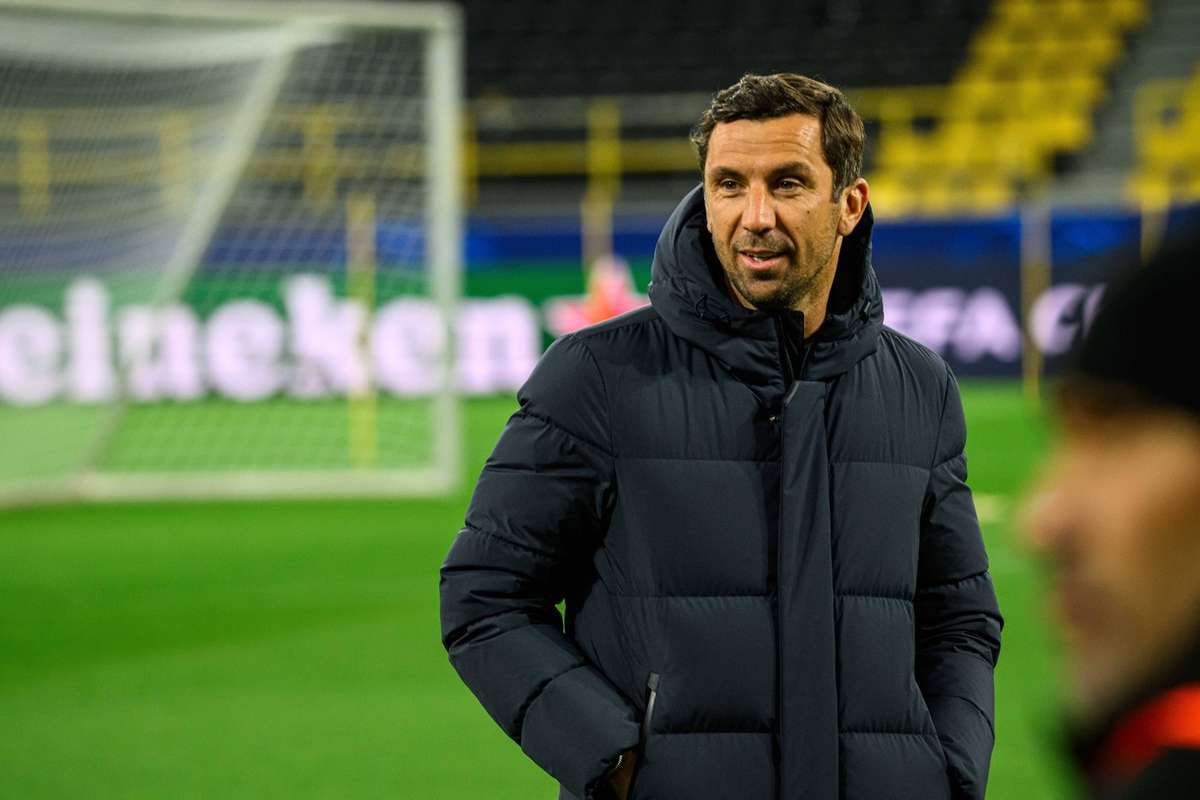
Srna further discusses his thoughts on Arda Turan's emerging success as a manager, the reason Croatia continues to generate exceptional players, and why he prefers his current setup even though his family resides in London and trips can last up to 20 hours.
Having contributed so much to Shakhtar as a player and leader, how challenging was the shift to sporting director?
"The transition was not too problematic for me since I simply kept contributing to the same club. To me, it is more than just a team; it is my football family. Naturally, you occasionally long for the excitement on the field and the supporters, but you need to recognise the right time to retire, and selecting the optimal moment is crucial. I believe I timed it perfectly.
"Following my retirement, I served as an assistant to Luis Castro, and after a year, I stepped into the sporting director position. I followed the essential progression. I am still relatively young and continue to learn. However, I must note that I took on the role amid the war, and trust me, it is far from straightforward. You are not solely a sporting director. Sometimes, you act as a parent, sibling, relative, everything. In wartime, maintaining concentration on work is a real struggle."
Was recruiting players and persuading them to join Shakhtar a tough task?
"Initially, it was. We brought in Castilho from Venezuela and Gio (Giorgi Gocholeishvili) from Georgia. We did not immediately target Brazilians due to the challenging period. Gradually, as we adapted to the wartime conditions, we resumed signing Brazilians: Pedrinho, Kevin, Marlon, Alisson, Isaque, and more. Meanwhile, we also transferred out numerous players."
Does securing titles and performing in Europe remain the primary goal for Shakhtar?
"Despite losing 14 players, we competed in the Champions League and achieved strong results. We held Real Madrid to a draw until the closing moments. We defeated RB Leipzig, and with (Marino) Pusic, we overcame Barcelona. Representing Ukrainian football on the European stage holds great significance for us."
What differences did Arda Turan introduce upon arrival, and was appointing him as head coach a challenge?
"I was aware of Arda Turan from my playing career, though we lacked a personal link. Similar to players, we keep a roster of prospective coaches and seek those who are youthful, driven, and eager. Attracting an established coach to Shakhtar is tough.
"Reviewing our coaching lineage; (Paulo) Fonseca arrived with limited experience, (Roberto) De Zerbi brought some, while Pusic and (Igor) Jovicevic had some background but were not yet seasoned. They all advanced significantly here. Arda fits that pattern.
"We began monitoring his efforts in Turkey's premier league, where he excelled. He achieved promotion from the second tier and nearly secured European qualification, missing by just three or four points. That marked a landmark accomplishment. We embrace young, motivated coaches without hesitation."
What impact did he have on the team environment?
"To begin with, he committed right away. In times of war, that is a major commitment. The same applied to Jovicevic and Pusic previously; both accepted promptly. They comprehended the context; yes, war exists, but they also grasped the stature of the club they were entering.
"Arda accepted without delay. We then engaged in thorough talks about the game, held two sessions prior to finalising the agreement, and our CEO Sergey and I travelled to Istanbul to seal it in a single day. Subsequently, he contacted me daily inquiring about the squad; their locations, their interactions. He was keen to dive in immediately. Though young, he possesses the attributes for a promising coaching career."
You have collaborated with numerous elite managers. Where do you envision Arda Turan in the coming years? Could he advance to one of Europe's top five leagues?
"Every manager who has passed through Shakhtar has progressed. Luiz Castro joined Botafogo, Pusic now leads Al Jazira successfully, Jovicevic moved to Qatar, then Saudi Arabia, then Ludogorets. De Zerbi advanced to Brighton, Fonseca to Roma. We nurture not only players but coaches as well.
"Regarding Arda, I am confident he will enjoy a stellar path ahead. Yet, initially, we have substantial tasks to accomplish together at Shakhtar, proceeding gradually."
In the 2009 UEFA Cup final, you earned 'Man of the Match' honours. How do you recall that occasion?
"Securing a European title with Shakhtar; I joined in 2003, and victory came in 2009. It was extraordinary for Ukrainian football and the nation. Afterwards, we assembled a remarkable squad at Donbas Arena. But due to Russia, we lost it all from 2014 onward. Our stadium, training facilities, base, supporters.
"Yet we endure, thanks to our president, Rinat Akhmetov. For him, football transcends business; it is passion, feeling, thrill. This year marks 30 years of his presidency at Shakhtar. Few club leaders worldwide match him. He is exceptional."
Regarding the Brazilian contingent; how did they initially join Shakhtar, and is there a dedicated scouting network in Brazil?
"This started in 2003 and 2004. Brandao was first, followed by Matusalem from Brescia. We soon saw success with Brazilians. The approach was straightforward: A Ukrainian and European backline, blended central area, and Brazilian creativity upfront. We have upheld this from 2004 to the present.
"Many of our Brazilian talents advanced to elite clubs. Fernandinho, Fred, Willian, Douglas Costa. Several remain at the pinnacle."
Was adapting them to Ukrainian and European styles challenging?
"Arriving at Shakhtar is no simple matter for them, but they are familiar with our legacy. I always advise: consult (Alex) Teixeira, Fernandinho, Willian, our ex-players, for the most accurate insights. They will urge: 'You must join'.
"Shakhtar serves as that pathway from Brazil to premier European sides, akin to Benfica, Ajax, Porto. Regrettably, time is now scarce. Previously, we had leeway; Willian needed nearly a year to settle, Fernandinho eight months.
"Today, we acquire 18-year-olds and integrate them directly. Take Isaque; at 18, he has netted five or six times already. It carries risk, but with the war, budget constraints, and urgency, options are limited."
How did the talks for Georgiy Sudakov's move to Benfica unfold?
"It was smooth, given our solid ties with Benfica. They acquired (Anatolii) Trubin and Sudakov; they eyed Kevin too, and we obtained Pedrinho from them. We maintain great rapport with their ex-president and Rui Costa now. Still, they understood a fair price was required for Shakhtar's star number 10."
Were Premier League teams also pursuing him?
"Yes, we nearly finalised with Italian and English outfits too. Sudakov is an outstanding prospect."
Might Artem Bondarenko pursue a comparable route?
"It is possible. We are managing a tricky equilibrium currently; extensive travel, several injuries. Yet our midfield depth is robust, and we are coping without key figures. This season in Europe has seen one of the highest injury rates in 20 years, reportedly. Factor in our 15 to 16-hour journeys for home games. That affects body and mind. Shifting from a 36,000-crowd venue to one with 4,000 or 5,000 tests resolve. Still, we are fostering that resilience."
Read our full interview with Bondarenko here!
Reflecting on Mykhailo Mudryk's switch to Chelsea, what are your thoughts?
"Many claimed the fee was excessive. That is incorrect. Why else would Chelsea invest that sum? Why did Arsenal pursue him? Why did all of Europe covet Mudryk? The issue was his timing at Chelsea during their roughest patch in 25 years.
"When a club spends €70 million, expectations soar, but results do not materialise instantly. Consider Isak at Newcastle, Grealish; examples abound. He is still developing. Prior to Chelsea, he had only 10 or 12 Champions League appearances."
How does Croatia sustain its flow of elite players? What is the key?
"We possess a certain quality; I cannot pinpoint it, but it exists. With 3.5 million people, we excel across sports. Fans constantly ask me and (Ivan) Rakitic this. No magic recipe. We are driven. We hail from modest beginnings. Lacking a central academy or elite facilities, we rely on grit and mindset."
Do you spot parallels between Croatian and Ukrainian football?
"Some resemblances exist. At Hajduk Split, I played for minimal pay. My salary sufficed, but my ambition was just to represent Hajduk; finances were secondary. Now, Croatian players earn substantial sums unavailable elsewhere in Europe early on. I view that negatively. Clubs in Croatia should thrive on youth systems, like Porto. Foreign imports help, but priority must go to local prospects."
What has been your most demanding deal as sporting director to date?
"Our CEO Sergey oversees most contracts. I focus on the individual. I seek to understand the player pre-signature. I converse directly, perhaps with family or representative. I conduct thorough checks to reduce risks. Errors happen regardless.
"Occasionally, adaptation fails mentally or culturally. That is inherent to the sport, to existence. Shakhtar's status derives not merely from spending €50 or €60 million; we recoup €140 million on sales. We invest in 18-year-olds and nurture them. That defines our approach."
What is your perspective on agents' influence in modern football?
"Frankly, I distrust most. A few I admire, and I inform them plainly: 'You advocate for yourself, not the player'. That is misguided. Prioritise the player. Football has become commerce; agents demand commissions exceeding player wages sometimes. It is evident. I dislike such dynamics. From experience, aggressive agents altering terms often lead to poor outcomes."
In conclusion, where do you picture Darijo Srna in five or 10 years?
"My wife and kids would say relaxing by the coast at home. But she recognised from day one my inseparability from football. For now, I am content here. My family has been in London six years, and with any three free days, I visit. When schedule permits amid deals and trips, we reunite.
"That backing is vital, particularly with travel from London now spanning 17, 18, or 20 hours based on borders. Unlike the past with three daily flights and under three hours to Heathrow. They appreciate the club's importance to me. I will stay with this club to the last. And with Ukraine to the end."