


Diluting the drama: The impact of 48 teams on the 2026 World Cup
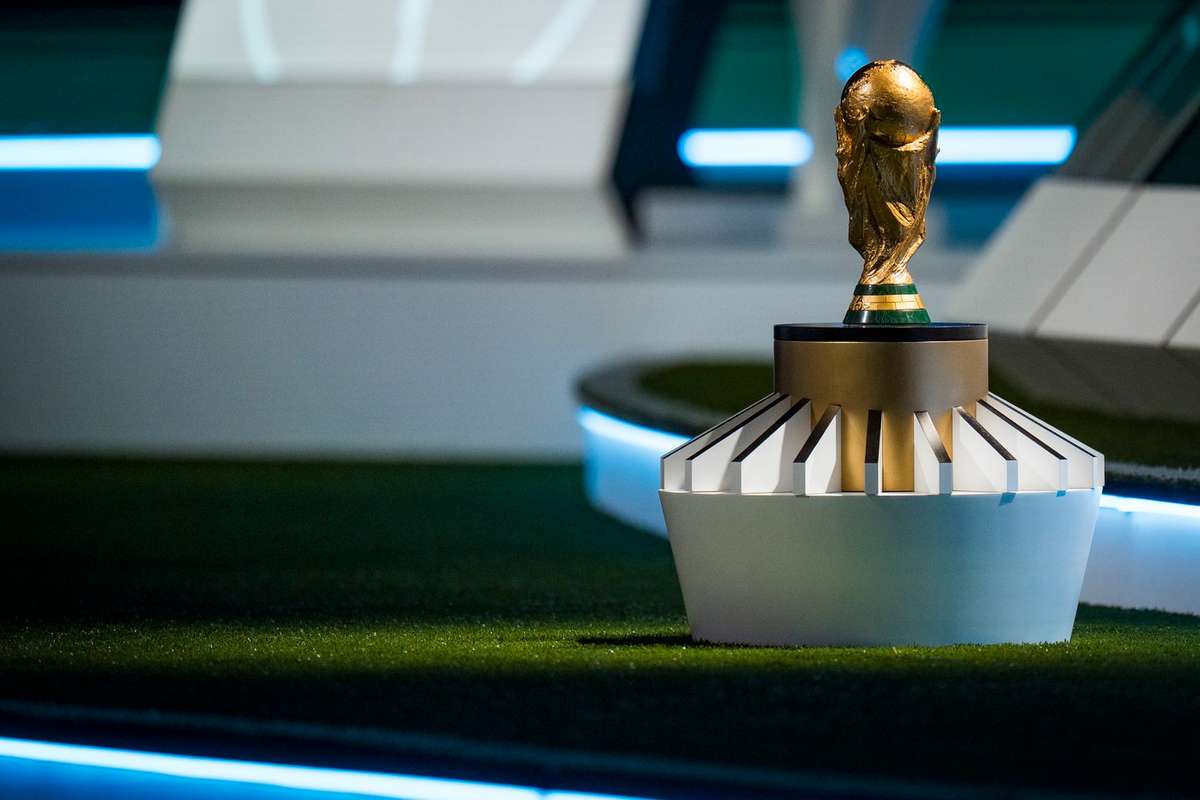
This enlargement fulfils a primary pledge from Gianni Infantino soon after his appointment as head of FIFA in 2016.
Infantino highlighted the need to offer greater opportunities to additional teams and suggested the World Cup should be regarded as more than just a tournament, but as a cultural phenomenon.
'Natural evolution'
For a large part of its past, the World Cup was far from truly international. It was led by European countries and select South American ones, sticking to a 16-team structure until the increase to 24 in 1982.
In 1978, ten out of 16 entrants were from Europe, and by 1990 in Italy, 14 of 24 were European.
Africa had only four spots across the initial 11 tournaments before 1982. Yet even in 1990, just two teams each came from Africa, Asia, and the CONCACAF region covering North and Central America plus the Caribbean.
The shift to 32 teams in 1998 provided a more balanced allocation of slots globally, though only five African sides reached Qatar in 2022, compared to 13 from Europe.
The change to 48 teams creates a more equitable division without cutting European allocations - now at 16, with Africa getting 10, Asia nine, South America and CONCACAF six each, plus New Zealand.
"It's a natural evolution. We want to make football global all over the world," Arsene Wenger, FIFA's chief of global football development, stated in December.
"I believe that 48 teams is the right number. It's less than 25 percent for 211 countries that are affiliated to FIFA."
The growth has enabled some of the planets tiniest nations to reach the finals for the first time - including the small Caribbean island of Curacao, home to around 160,000 people.
"Once in a decade or once every four years, it happens that a small country is the surprise," Curacao coach Fred Rutten told AFP, hoping to pull off a couple of big shocks.
Cape Verde, Jordan, and Uzbekistan are among other debutants. The updated structure boosts the chances for underdogs to progress past the groups and into the round of 32, the opening knockout phase.
With the top two from each of the 12 groups advancing, plus the eight strongest third-placed teams, a single victory in the opening stage might be enough to move on.
'Dilution of spectacle'
However, this reduces the tension in the early stages, as top teams may not worry much about an initial loss - unlike in 2022, when eventual winners Argentina were truly alarmed after losing to Saudi Arabia.
Watching a powerhouse exit during the groups, like Germany in the past two World Cups, is probably history now.
In 2022, 48 group matches eliminated 16 teams. Now, 72 fixtures will be needed in the first phase to remove the same amount.
To claim the title, sides must now contest eight games - possibly in draining heat during a North American summer - up from seven before, piling extra strain on star players already under pressure.
"I see the argument about increasing representation but I think a 32-team finals was perfect," says Jonathan Wilson, author of The Power and the Glory, A New History of the World Cup.
"The biggest problem with this is not really the quality, it's the dilution of spectacle in the first round with eight third-placed teams to go through," he tells AFP, warning that the groups could test fans endurance.
Moreover, he notes the extra knockout stage might promote conservative, low-scoring play.
For elite squads, the initial goal is simply to avoid early stumbles.
"You just focus on the group, this is what you do, and make sure you are in the right headspace," insisted England coach Thomas Tuchel.