


Asian Cup success hides underlying problems across the continent
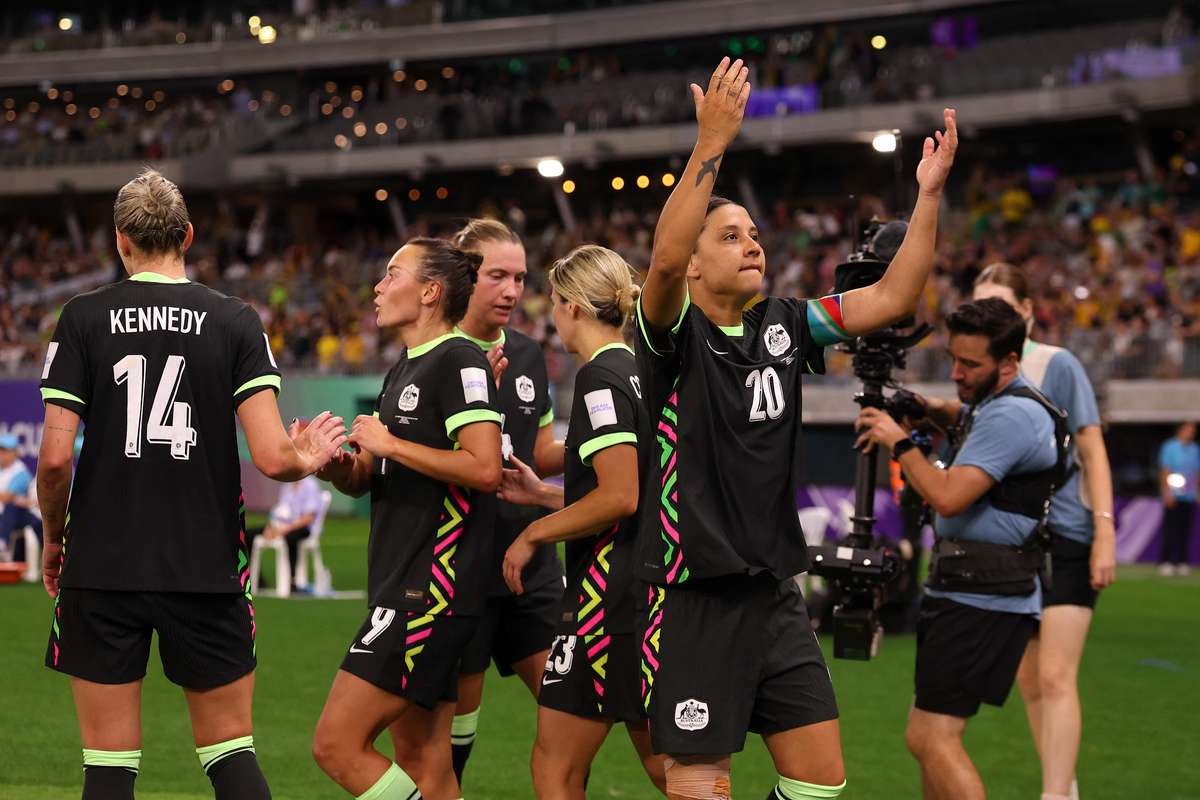
Over two years after co-hosting the 2023 Women's World Cup, supporters in Australia have once more demonstrated their passion for global football, breaking multiple attendance benchmarks at this four-yearly highlight.
Yet another large audience at Saturday's decider between Australia and Japan in Sydney's Stadium Australia will push the total turnout far beyond 300,000, exceeding the prior mark of 59,910 from the 2010 edition in China by more than fivefold.
A turnout of 60,279 at Stadium Australia observed Australia's 3-3 stalemate with South Korea, marking the largest ever for a Women's Asian Cup encounter. It also eclipsed the preliminary round record of 50,276 who saw 2015 hosts Australia face Oman in the men's competition.
The strong showing and achievements of the host Matildas have driven up the numbers, yet Australia's diverse immigrant groups have also rallied behind various away sides.
The attendance of 17,367 for Japan's semi-final triumph over South Korea set a new benchmark for a fixture between two teams neither of which was hosting.
"In general, I feel this tournament signals a major shift for women's football in Asia," stated Kanya Keomany, head of the Asian Football Confederation's (AFC) Women's Football Committee, in an official release.
However, on the field, the divide between Asia's established leaders and the remainder stays as pronounced as before.
Australia and Japan are set to contest the championship for the third occasion in four Asian Cups.
The AFC grew the event to 12 teams from eight starting in 2022, but it still feels like an exclusive club.
Excluding Japan and Australia, just China with its nine titles, along with North Korea and South Korea, have reached the final in the last 25 years.
This entrenched order underscores the limited progress for up-and-coming countries, where women's setups suffer from insufficient funding and professional structures.
"It proves extremely challenging for (their athletes) to dedicate equivalent hours to the game as the leading sides do," explained Beau Busch, Asia-Oceania head of the players' organisation FIFPRO, to Reuters.
"This situation risks creating a divided landscape in Asia, almost like a two-tier system."
Whereas Europe has surged ahead in advancing the women's sport and secured unprecedented earnings and backing in its leagues, Asia has lagged behind.
Wealthy Gulf states pour billions into European football yet allocate mere scraps to nurturing their own women's initiatives.
Bahrain, ranked 110th worldwide, leads the Gulf in women's rankings, with 69th-placed Iran topping West Asia.
Qatar, host of the 2022 men's World Cup, holds no ranking in women's football.
The AFC has initiated efforts to grow the women's sector, such as starting the Women's Champions League in 2024, though observers note the advances are inconsistent.
Awards for winners continue to pose a major concern.
The Asian Cup's US$1.8m total is the smallest among women's regional events, just over half the US$3.47m from the 2024 Africa Cup of Nations.
It equates to roughly 12% of the sum for the 2023 men's Asian Cup in Qatar.
The often-decried funds at the 2023 Women's World Cup amounted to about one-quarter of those for the men's version in 2022.
The AFC offered no reply to inquiries regarding disparities in prize allocations and support for women's efforts.
Athletes express ongoing discontent with funding imbalances in their domestic setups. Last year, South Korea's women nearly boycotted this Asian Cup due to facilities.
Busch indicated that the AFC should lead by example for its affiliates, closing the prize gender divide and outlining a firm strategy for women's football to benefit everyone.
"To truly thrive and emerge as a football giant, Asia cannot rely on merely two or three strong countries. It requires 10 or 12 to foster true rivalry," he remarked.
"Without a goal in sight, you cannot score.
"Ultimately, we seek a defined pathway for advancing women's football throughout Asia.”