


South Africa highlight homegrown talent as other World Cup sides lean on foreign-born players
- Algeria
- Argentina
- Austria
- Belgium
- Bosnia & Herzegovina
- Brazil
- Canada
- Colombia
- Curacao
- D.R. Congo
- England
- France
- Germany
- Ghana
- Haiti
- Italy
- Morocco
- Netherlands
- Panama
- Portugal
- Saudi Arabia
- Senegal
- Spain
- Switzerland
- World Championship
- Australia National Team
- Cape Verde Islands National Team
- Congo DR National Team
- Croatia National Team
- Ecuador National Team
- Egypt National Team
- Iran National Team
- Iraq National Team
- Japan National Team
- Jordan National Team
- Korea Republic National Team
- Mexico National Team
- New Zealand National Team
- Norway National Team
- Paraguay National Team
- Qatar National Team
- Scotland National Team
- Somalia National Team
- South Africa National Team
- Sweden National Team
- Tunisia National Team
- Turkey National Team
- Uruguay National Team
- Uzbekistan National Team
Every one of the 26 players chosen by Hugo Broos was born in South Africa. The nearest the team gets to a player with connections to another nationality is defender Ime Okon, whose parents are Nigerian, but he was born in Johannesburg.
Another entirely homegrown squad is in Bafana Bafana's group, where every player in the Czech Republic team was born in that country.
Brazil, Colombia, Panama, Austria, Sweden and Saudi Arabia are the only other sides with entirely homegrown squads.
Overall, 310 players at the World Cup were born outside the country they will play for, which amounts to a quarter of all participants and reflects the increase in human migration over the past 50 years.
The side with the highest number of foreign-born players is Curaçao, where 25 of their 26-man squad were born in the Netherlands. Midfielder Tahith Chong is the one notable exception.
It comes as no surprise that African nations are well represented on the list. In second place is DR Congo, with 20 players born outside its borders: France (11), Belgium (5), England (2) and Switzerland (2).
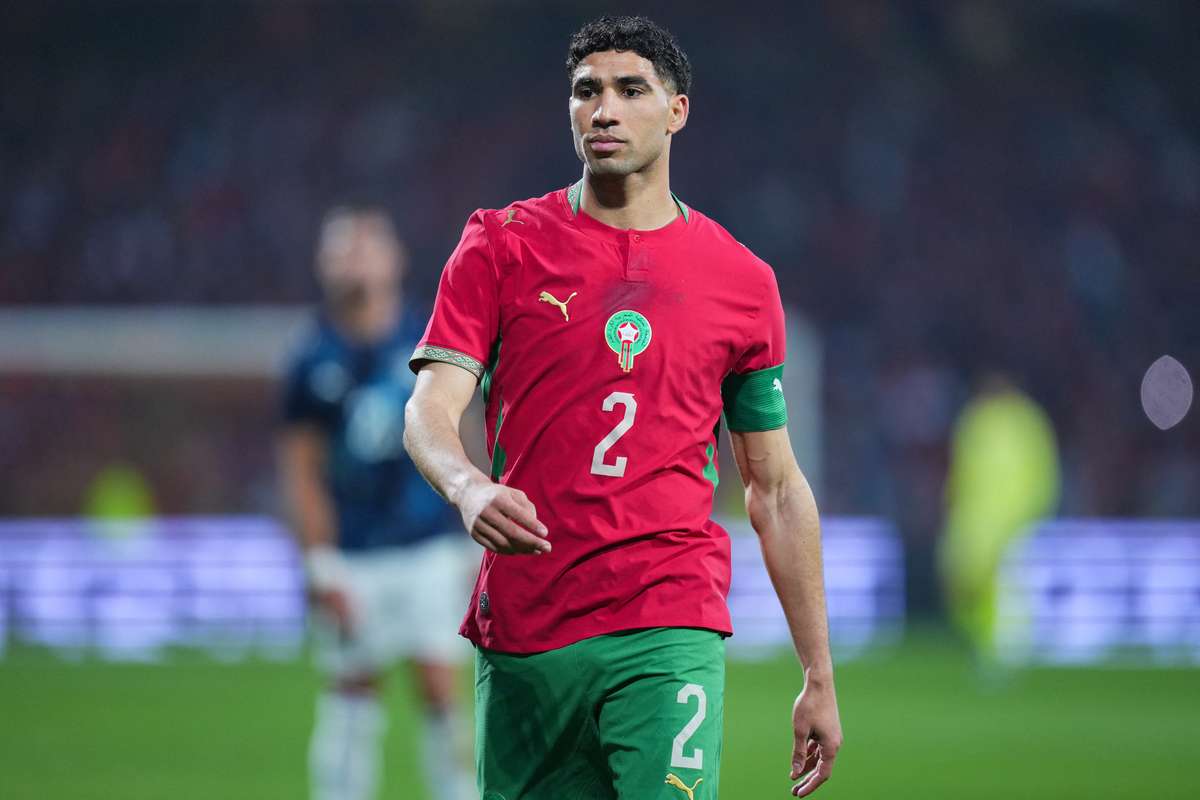
Morocco follow with 19 foreign-born players, among them a notable Spanish influence with figures such as Achraf Hakimi and Brahim Díaz. Their overseas-born group comprises players born in France (6), Spain (5), Belgium (3), the Netherlands (3) and Canada (1), the last being goalkeeper Yassine Bounou.
Bosnia and Herzegovina is the European country with the most foreign-born players, totalling 17, including four born in Germany.
Algeria have 16 players born abroad, with 13 born in France and one each in Belgium, Germany and the Netherlands.
Haiti also have 16 foreign-born players, including 12 born in France, two in the United States, and one each in Canada and Switzerland.
Qatar present an interesting case, with 14 players born outside the country across nine different nations, such as Brazil, Ghana, Portugal, Senegal and Somalia.
France, meanwhile, will have an astounding 75 players born within its borders representing other teams at the World Cup. Their own squad also contains three foreign-born players: Michael Olise (England), Marcus Thuram (Italy) and Brice Samba (DR Congo).
This means that nearly 8% of the 1,248 players chosen for the tournament were born in France.
Defending champions Argentina have two foreign-born players: Giuliano Simeone (Italy) and Nico Paz (Spain), while Portugal have Matheus Nunes (Brazil) and Diogo Costa (Switzerland).
Even England have a single foreign-born player in defender Marc Guéhi, who was born in Côte d'Ivoire.
Germany's only foreign-born player is Waldemar Anton, who was born in Uzbekistan.
One of the more unusual cases is Netherlands midfielder Guus Til, who was born in Zambia and was for a time courted by that country to play for them internationally.
Number of players born outside the country they will represent at the 2026 World Cup:
Curaçao (25)
DR Congo (20)
Morocco (19)
Bosnia and Herzegovina (17)
Algeria (16)
Haiti (16)
Tunisia (15)
Cape Verde (14)
Qatar (14)
Senegal (12)
Turkey (10)
Côte d'Ivoire (9)
Iraq (9)
Australia (8)
Ghana (8)
Croatia (8)
New Zealand (8)
Scotland (7)
Canada (7)
Mexico (5)
Paraguay (5)
France (3)
Ecuador (3)
Jordan (3)
Switzerland (3)
Argentina (2)
Iran (2)
Uruguay (2)
Norway (2)
Portugal (2)
England (1)
South Korea (1)
Germany (1)
Spain (1)
Uzbekistan (1)
Belgium (1)
Japan (1)
Netherlands (1)
Egypt (1)