


EXCLUSIVE: Vahid Halilhodzic on managerial career and 'nightmare' with Morocco
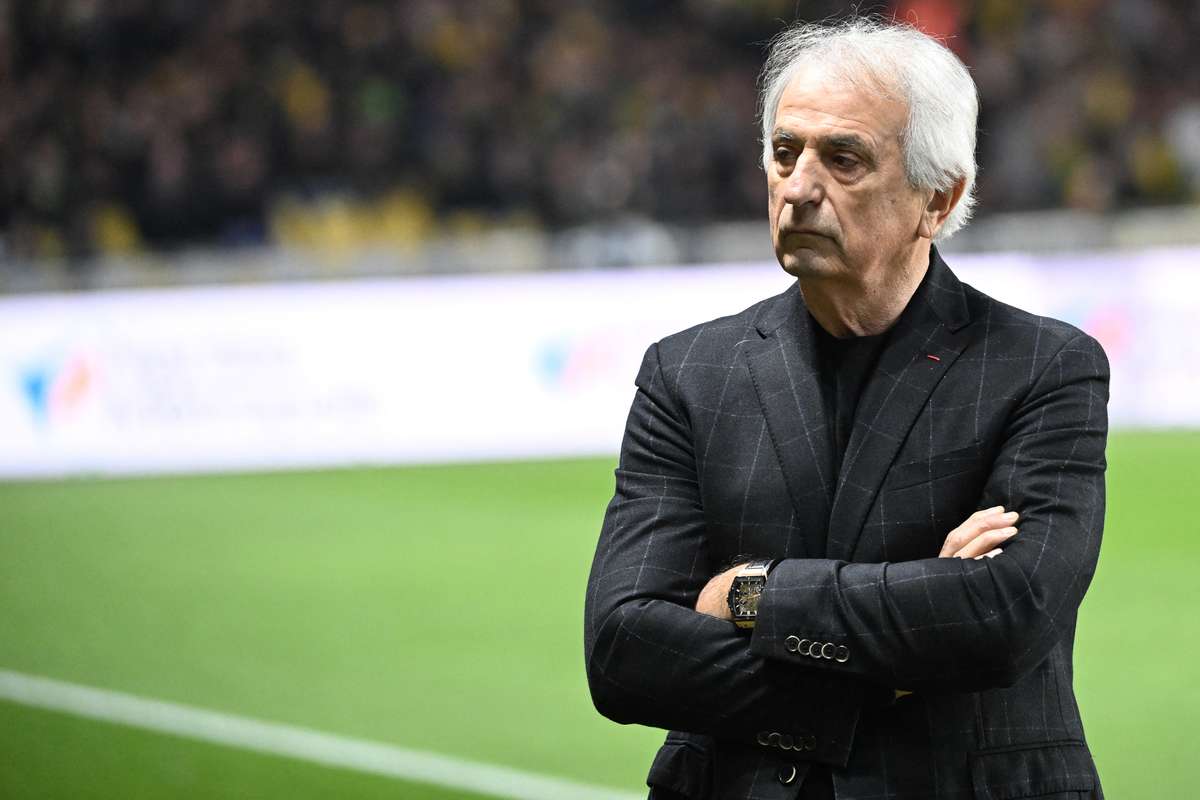
Vahid Halilhodzic, you have managed several national teams on different continents. What are the main differences between being a national team coach in Africa, Asia, and Europe?
"There are both differences and similarities. Above all, it is the players who determine how you work, and their level of quality also plays an important role.
"In Africa, players are often physically strong, fast, and athletic. A style of football based on impact and intensity generally suits them well, and you have to adapt to these characteristics. Asian players, on the other hand, have a different profile: they are often smaller, lighter, and very quick. The game must therefore be adapted to their specific qualities.
"Europe is a mix of all that. It is where you find the highest concentration of talent and the best players in the world. The key for a national team coach is to adapt your football to the qualities of the team you are leading."
In your opinion, what is the essential quality needed to succeed today as a national team coach?
"The job of a national team coach is very different from that of a club coach. You see the players for seven or eight days at each gathering, you play two matches, then you repeat this process five or six times a year. But even when you are not with them, you are constantly following them. With your staff, you watch between 50 and 60 players every weekend and analyse their performances.
"You have a group of assistants who produce a detailed report on each of them every week. You study these reports, compare them, and analyse them. I will actually reveal something I have never really talked about in the media.
"After every competition weekend, my staff and I would create an evaluation chart with a colour system: black for a very poor performance, brown for a slightly better showing, yellow for a good performance, then blue and green for the two best ratings.
"All this data was compiled into an analysis that we presented to the players when they arrived for national team duty. They were often surprised to see that we followed each of their matches so closely. The goal was simple: leave nothing to chance."
Has the role of national team coach evolved more in recent years than that of a club coach?
"As I just explained, they are two different jobs. At a club, you are in contact with the players every day, and you get very little rest. Both roles require a huge amount of work, but the main difference is the time spent with the players.
"With the national team, you only see them a few days a year. That is why it is essential that they know you are watching them and tracking their progress. It pushes them to stay sharp and involved."
You are one of the few coaches to have qualified several teams for the World Cup. Which of these qualifications makes you the proudest?
"I have qualified four teams for the World Cup and, in most cases, quite convincingly. With Ivory Coast, Japan, and Morocco, the qualification went smoothly. With Algeria, the situation was different. I had to lead a deep rebuild with a new generation of players in a particularly tough group.
"Despite that, we managed to qualify. I am also the only coach to have been prevented, three times, from showing at the World Cup what I had truly built and deserved. The main problem came from certain influential people - ministers, presidents, or officials - who tried to interfere with my player selections.
"In Japan, for example, some sponsors supporting particular players would pay the federation so those players would be picked. I always refused that kind of interference."
You managed an exceptional generation with Didier Drogba, Yaya Toure, and Gervinho. What memories do you have of that team?
"It was an extraordinary generation. However, there were two distinct groups in the dressing room because of the consequences of the civil war. On the surface, relations seemed good, but there was still a deep divide. The team was not united enough to reach its full potential.
"With players of such quality, I was convinced we could achieve something great at the World Cup. I knew how to bring those two groups together and create real unity, because to succeed at the highest level, team spirit has to be genuine and authentic."
Does Ivory Coast have the potential to go far at the next World Cup?
"This team still has talent and real potential. However, I think the generation of Drogba, Toure, and Gervinho was even stronger. The current team had a bit of luck during qualification, but it still has players competing in the top European leagues, which keeps them competitive.
"African football is constantly improving. Some teams are now able to compete with the best nations in the world. Kids live for football and play all day long, while many European coaches now come to work on the continent. The progress made is significant."
Algeria’s 2014 campaign remains one of the most remarkable African performances in World Cup history. Looking back, how do you view that adventure?
"I am very proud of it. It was an exceptional adventure, both in sporting and human terms. I had a group of players who were still little known on the international stage, but thanks to experience, hard work, and a lot of courage, we managed to achieve a historic result.
"The match against Germany stands out in particular. Throughout the tournament, they only really struggled against us before going on to become world champions. Many observers even thought we deserved to win that match. I remember that after the game, the entire German staff came to congratulate me. It is a memory that will stay with me forever."
Do you still feel the affection of the Algerian people today?
"Absolutely. Algerians have very fond memories of that World Cup and what we accomplished together. Algerian journalists still regularly reach out to me, even though I rarely respond to their requests. That adventure earned me immense respect in the country."
Japan is known for its high standards of organisation. What did you take away from that experience?
"Japan is an extraordinary country. In terms of organisation, everything is planned down to the minute. During my four years there, I never had a single problem. It is also a pleasure to work with Japanese players: they are calm, hardworking, and extremely disciplined. Everything is prepared in the smallest detail, whether it is travel, hotels, or daily logistics.
"The level of organisation is impressive, right down to the tiniest aspects. And honestly, it suits me perfectly, because that is how I operate myself."
How do you explain Japan’s steady progress in football over the past twenty years?
"Precisely because of everything I just mentioned: hard work, discipline, rigour, and a passion for the sport. When these qualities are combined with talent, results naturally follow."
Do you look at Morocco’s historic run at the 2022 World Cup with pride, frustration, or a mix of both?
"I would rather not talk about it too much. Since I left Morocco, I have not watched a single second of their matches. Not a single second, because what I experienced there was a real nightmare.
"I had prepared everything with great care and invested a lot of energy in that project. Being dismissed without a valid reason is something you do not forget. I devoted so much time and effort to that team that the wound is still there today."
You have become an important figure in Bosnian football. What is your relationship today with Bosnia and Herzegovina, and how do you feel when you watch the national team?
"As a former player and then coach, I am very proud of everything that is happening right now. I was genuinely happy to see the team qualify, and I wish the players and the coach a great World Cup. I hope they make the most of this experience, because they have earned it. I remain a passionate supporter of this team, and I really appreciate what they are achieving today."
Bosnia and Herzegovina reached its peak with qualification for the 2014 World Cup. In your view, what explains the difficulties since that generation?
"Bosnia and Herzegovina is a complex country. Many people are still trying to prevent the emergence of a true common identity. In this context, a coach who tries to build unity, like Sergej Barbarez, faces many obstacles. His goal is to create a sense of national pride similar to what you see in Croatia.
"He wants the players to feel a real sense of belonging when they wear the shirt. But in the conditions I have described, that work is especially difficult to accomplish."