


The Trio of Refugees Aiming to Drive Australia’s World Cup Success
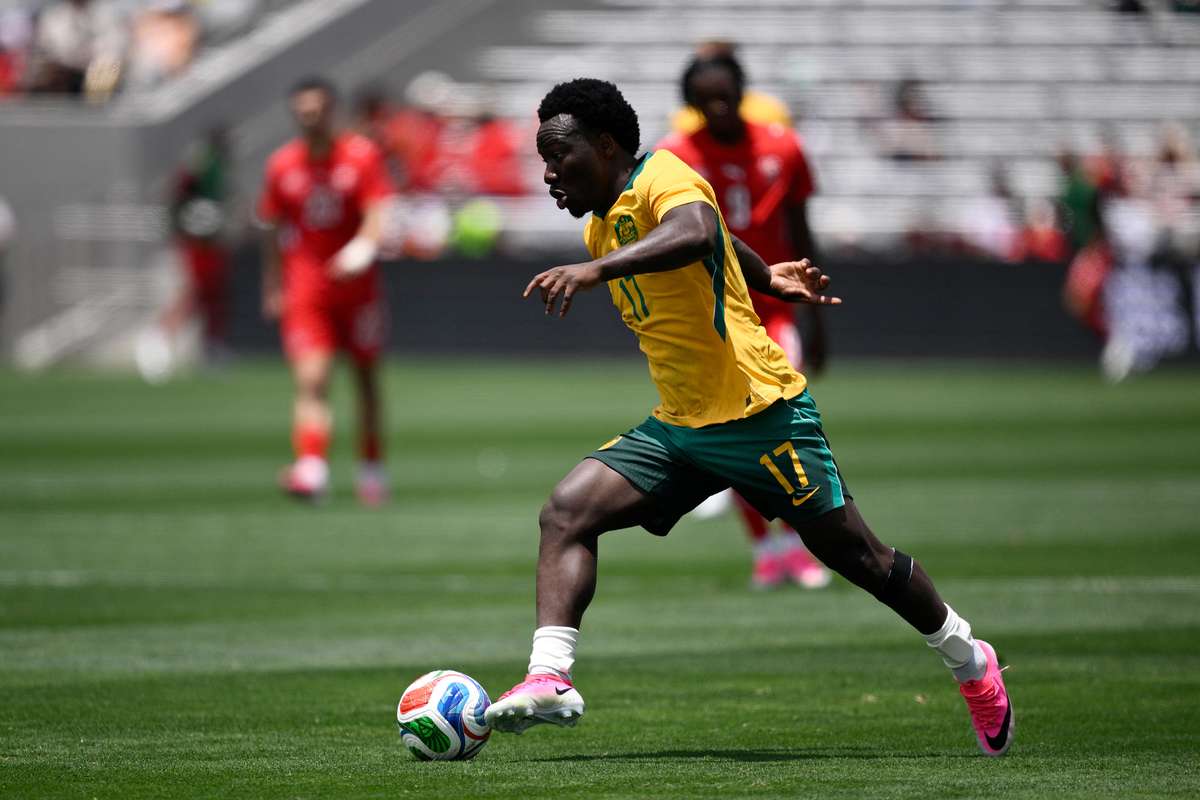
Coach Tony Popovic is placing his trust in attackers Mohamed Toure and Nestory Irankunda, two young talents hoping to make their first World Cup appearances when the Socceroos face Turkey on Saturday.
At 30 years old, Awer Mabil acts as the duo’s “older brother” and will be ready to support them as a mentor at his second World Cup.
The three share the common experience of being children of asylum seekers who climbed the football ladder in Australia’s sleepy state capital, Adelaide.
Already celebrated among Australia’s half-million strong African diaspora, their chemistry could prove vital to Australia’s chances of progressing through the group stage and winning a World Cup knockout match for the first time.
“It’s the country that gave us the opportunity to live,” said 22-year-old Toure.
“So I think (the World Cup) would be the best way to pay back and just do what I love at a top level.”
Toure, who plays in England’s second division, was born in a refugee camp in Guinea after his parents fled Liberia.
Despite only having 10 caps, he has established himself as Popovic’s first-choice striker following a flying start with Norwich City, where he scored nine goals in 11 appearances.
He is close friends with 20-year-old Irankunda, who was born in a Tanzanian refugee camp and also plays in England’s second tier for Watford.
Irankunda’s much-hyped move to Bayern Munich in 2024 did not succeed, but the son of Burundian parents has become a fan favourite in 15 appearances for Australia thanks to his energy and flashy goal celebrations.
Mabil first played football with other children at a refugee camp in Kenya, where he lived until the age of 10 after his family was displaced by civil war in Sudan.
Initially overlooked by Popovic, the 38-cap forward was recalled to the Socceroos for the first time in nearly two years in March after finding form for Castellon in Spain’s second division.
“Obviously, I had a little taste in the last one (World Cup), but this one will mean more because I think it’s not been an easy couple of years for me,” he said.
Once almost entirely dominated by players of European heritage, Socceroos squads have become increasingly diverse.
Six players with African heritage – nearly a quarter of the World Cup squad – will hope to take the field in North America, double the number selected for Qatar 2022.
Four grew up and played in Adelaide, an unlikely hotbed of African football talent.
Tall, Japan-based striker Tete Yengi, who scored on his debut in Australia’s 1-1 World Cup warm-up against Switzerland, is another member of the Adelaide group.
Yengi, whose brother Kusini is also a capped Socceroos forward, has South Sudanese heritage and a strong bond with his former Adelaide United teammate Irankunda.
The Adelaide A-League club has close ties to the city’s African communities and a track record of developing raw juniors, having given Irankunda his debut at the age of 15.
“That’s why we keep producing these hidden gems,” Deng Akoy, a South Sudanese-Australian coach for Adelaide’s youth team, told Reuters.
While Australia grants asylum to thousands of refugees each year, immigration has become a political football in the country, with populist politicians blaming it for high housing costs and social problems.
Players like Toure and Irankunda have the chance to change the narrative at the World Cup and demonstrate the success of multiculturalism, said Akoy.
“Australian football is reflecting modern Australia. So that’s something we should all celebrate.”