


Why Danes and Swedes would love to see Brazil put Norway's World Cup hysteria to an end
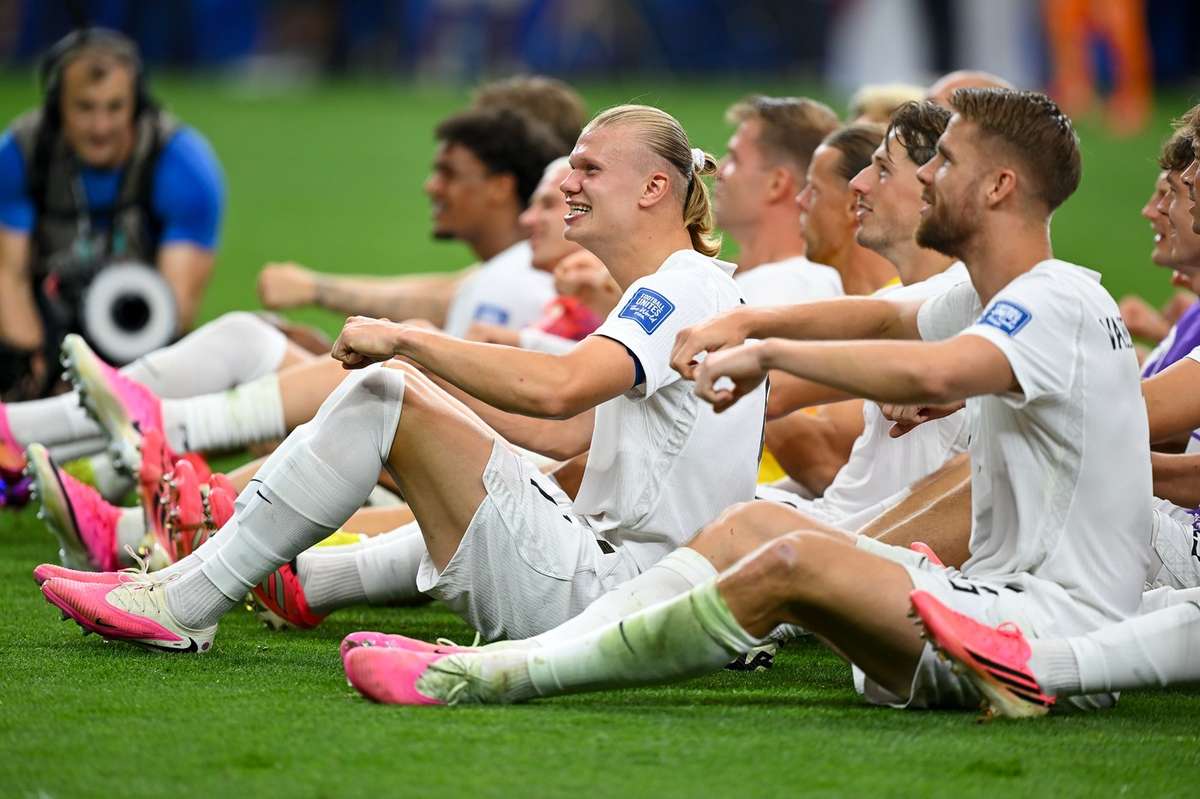
In a similar fashion to the Icelandic thunderclap that took over the 2016 European Championships, the synchronised Viking rowing chant that accompanies the Norwegian football team’s appearances has turned into a viral phenomenon of the 2026 World Cup.
While football fans have rowed in stadiums in Boston and in Times Square, the local population in Norway has carried on the tradition by rowing in schools, hospitals, and even in Parliament, where the prime minister joined in.
Norway’s star striker Erling Haaland posted a clip of the squad rowing after their win over the win against the Ivory Coast and said to reporters: “Seeing thousands rowing with you, you feel the energy. It gives you goosebumps.”
As Stale Solbakken's outfit went on to record their best World Cup run since 1998 by reaching the last 16, enormous crowds of jubilant supporters brought the noise to such unprecedented levels that seismologists reportedly recorded an earthquake in Oslo.
For the Danes and the Swedes, however, their neighbours' celebration has proved to be much more of a nuisance than a novelty.
"I am never going to do it. We just sigh. Perhaps mostly at the TV crew who choose to zoom in on it every single time," Sweden defender Gustaf Lagerbielke told reporters at a press conference before Sweden crashed out of the World Cup against France. "It is very similar to the Icelandic volcano, after all. But, whatever floats your boat."
Not even the scandals of the Norwegian Monarchy and Princess Mette-Marit' extensive ties to the late sex offender Jeffrey Epstein as well as her son Marius Borg Hoiby's criminal charges has been able to diminish the Norwegian World Cup fever as the government has loosened strict alcohol prohibitions and tickets for the big screen event at the Ullevaal Stadium in Oslo for the game against Brazil were sold out in less than ten minutes.
As the party following the 2-1 win against the Ivory Coast reached its absolute peak, Norwegian fans began singing "Buy all of Sweden" ("Kjøpe hele Sverige"), a Norwegian patriotic song poking fun at Sweden in the tune of the American folk song "She'll Be Coming 'Round the Mountain".
The song delves into a contentious topic between Norway and its Scandinavian neighbours, as Danes and Swedes are generally envious of Norway's enormous financial wealth. Norway is consistently ranked as one of the richest countries in the world, as the country generates an extraordinary revenue per citizen because of its modest population of about 5.5 million people and vast offshore oil and natural gas reserves.
If that wasn't enough, Norway may also boast of incredible nature, which their Scandinavian neighbours can only dream of. While Sweden enjoys a vast wilderness, beautiful archipelagos and dense forests, and Denmark has incredibly scenic coastlines, neither have the same jaw-dropping glacial fjords and snow-covered mountain peaks that have grown Norway's reputation as a globally renowned natural haven.
To increase the envy from their Scandinavian neighbours, Norway just four months ago boosted its reputation as an athletic superpower by dominating the 2026 Winter Olympics in Milano Cortina and winning an astounding 41 total medals (including 18 golds) as Johannes Klaebo became the all-time gold-medal leader in the history of the Winter Olympics with 11 gold medals.
Denmark and Sweden used to have football to fall back on, at least before the 2026 World Cup, as they have always dominated their Norwegian arch-rivals in terms of qualifying for tournaments, but those days seem to be gone now.
"In terms of football, Danes like to consider themselves as the Brazilians of Scandinavia", said Norwegian national team coach Stale Solbakken to me when I interviewed him for the book "Indspark Udefra" from 2014.
"The Danes have always considered themselves as big brother to Norway in football, and they always want to underline that they are superior in this part of the world. They always try to promote attractive football and would rather lose 5-4 in a hugely entertaining game with plenty of beautiful skills than win 1-0 in a deadly boring game. So, they have earlier ridiculed us for our more direct approach", says Solbakken.
In the same book, former Olympic gold medallist and one of the best female handballers ever to grace the game, Gro Hammerseng, says that the Danes have something to learn from the Norwegians.
"While I played in Denmark, I often felt that the Danes focused more on negative things than positive things and perhaps did not take as much pleasure in the accomplishments of others like I feel we do in Norway".
Should Norway continue their impressive success against the most successful national team in the history of the World Cup, Danes and Swedes are likely to plan summer holidays in the Southern hemisphere out of fear that they may be confronted with their inadequacies should they choose to visit Oslo, Bergen, Bodo, or Stavanger.