


European court rules insulting and criticising referees 'a right'
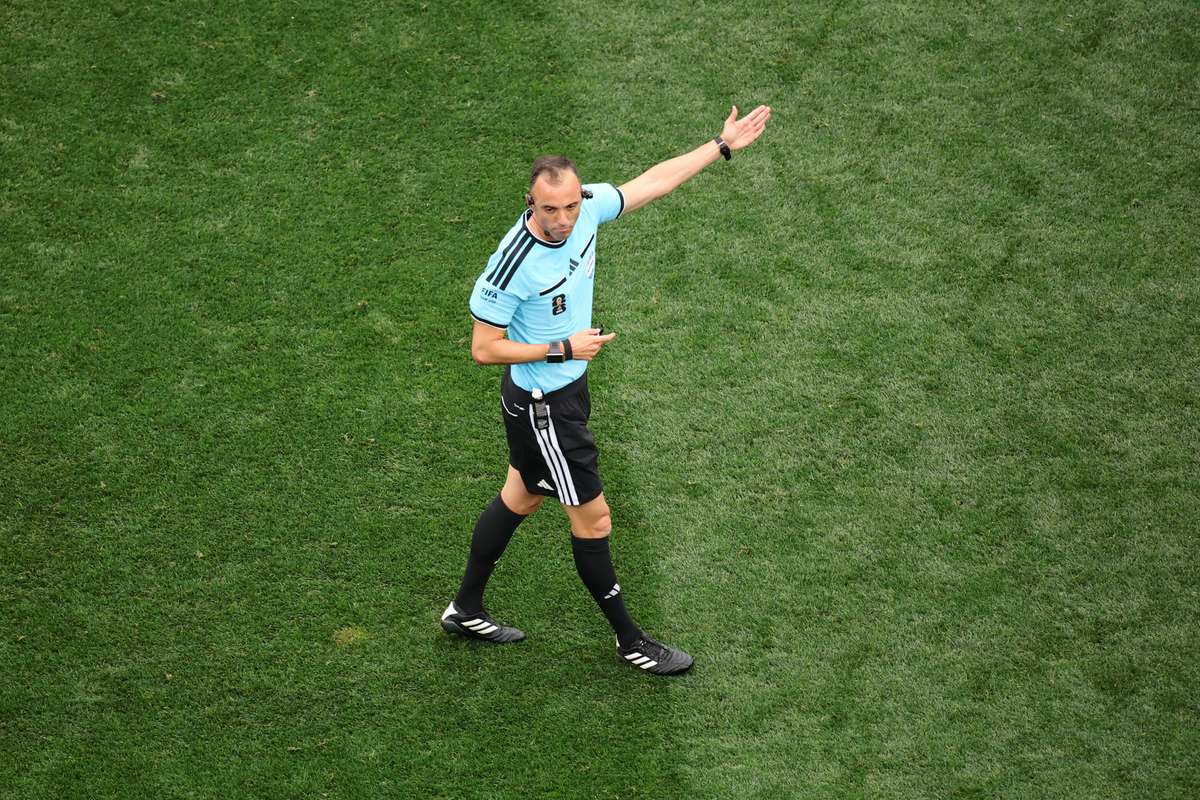
The court, based in Strasbourg, was ruling on a series of cases brought by Porto football club and two of its former officials.
The cases concerned a series of punishments imposed by the Portuguese football authorities and courts for attacks by media outlets owned by Porto that called into question named referees and the refereeing system as a whole, following matches involving, in particular, bitter rival Benfica.
The European Court rejected the Porto position in the majority of cases which involved "accusations of corruption and match manipulation".
"Mere refereeing errors or irregularities, even if they are numerous or repeated over time, do not constitute, on their own, sufficient evidence of the existence of the scheme alleged by the applicants," said the judgement. "Therefore, such speculative connections or assumptions were made by the applicants and conveyed to the wider public without a minimal factual basis."
It pointed out that Portuguese courts had referred to "conspiracy theories".
However, the court found in favour of the club newsletter Dragoes Diario, which was punished for a 2019 article published after Benfica won 4-1 at Feirense. The piece said that a named official "has a problem with impartiality" and "had a career as a referee full of untenable decisions" before becoming a VAR official and "following the same shameful path".
The court decided this was acceptable fan talk.
"Those statements were value judgements about a referee's performance," it wrote. "Such critical remarks are commonly made in the context of football, where incidents during a match often give rise to varying and contested interpretations and opinions, often influenced by club affiliations."
The court added that abuse came with a referee's job.
"Referees participating in high‑ranking football competitions are indeed subject to a degree of public exposure," it wrote. "When referees are acting in this capacity, they may be subject to wider limits of acceptable criticism than ordinary citizens."
It ruled that the Portuguese punishments for these remarks violated Article 10 (on freedom of expression) of the European Convention on Human Rights, and ordered the Portuguese authorities to repay a €15,300 fine as damages and to cover costs
The ECHR is an international court responsible for adjudicating disputes relating to violations of the European Convention on Human Rights in the 46 signatory states.