


VIEW: Barcelona's Clear Weaknesses Merely Underscore Flick's Triumphs While He Targets a Second Trophy
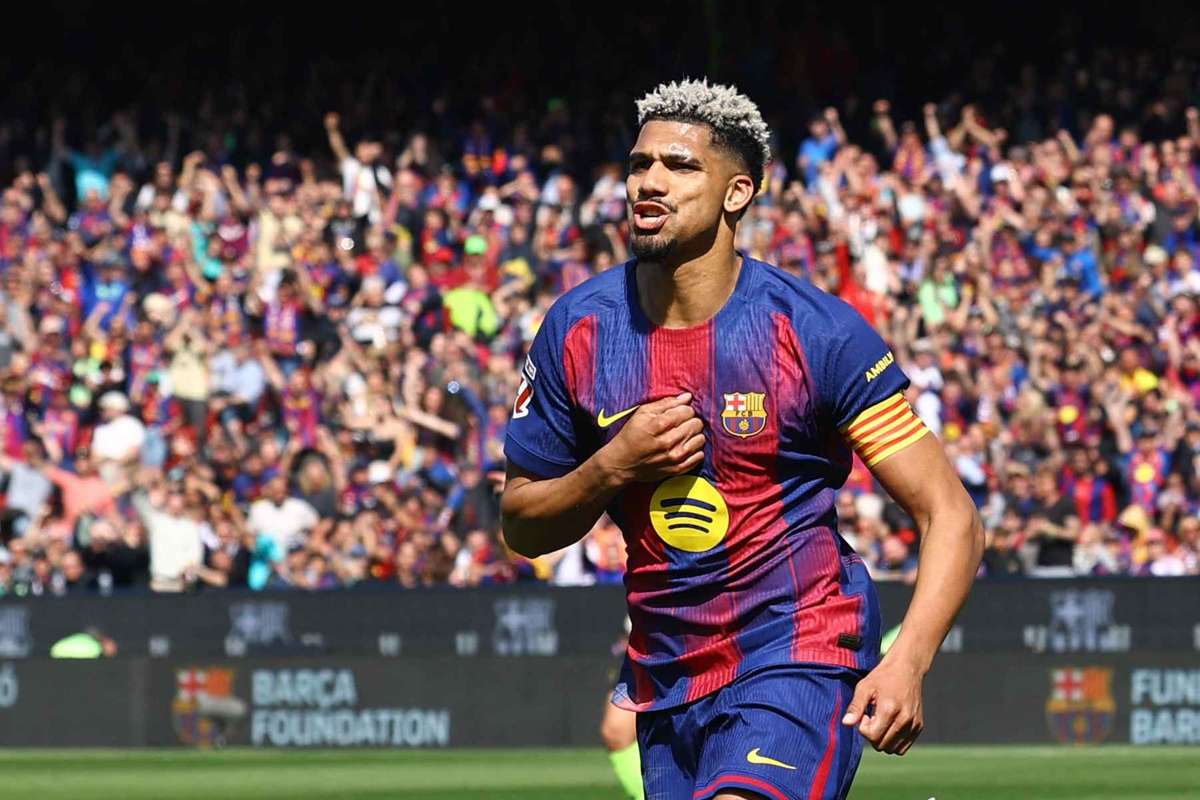
Gazing at the spotless turf of Camp Nou under the sharp spring sunlight, much like the cranes encircling the venue, and noting the neat chequered pattern of the lawn, it is difficult not to recall the famous Eixample neighbourhood, the vast urban area planned in precise square grids by Ildefons Cerdà during the 1800s.
Observing the squad advance dynamically, seeking gaps versus Rayo Vallecano during the opening period, I found myself stretching that theme a bit more.
Occasionally, traversing the straight intersecting streets of Barcelona's bustling city centre, always turning at right angles, can prove challenging. Aesthetically pleasing, yet awkward when pressed for time. Then, you reach one of the avingudas, the broader slanted thoroughfares that slice across the rigid layout of Eixample like flowing highways, and progress feels far quicker.
At times, a straighter path to the objective is essential. In a sense, that is an element Flick has instilled in his team. In soccer terminology: verticality.
This version of Barcelona shows no hesitation in deploying the long pass as a tool to shorten their path to the net, they launched it 37 times last Sunday. And why hold back if your lineup features a central figure such as Robert Lewandowski, the rapid pace of Raphinha, Fermin Lopez, and Marcus Rashford, plus the exceptional skill of Lamine Yamal in isolated matchups?
It extends beyond just long passes, naturally. If the wingers serve as Flick's principal straight routes, Pedri offers the narrow side passages. His skill in evading markers, staying poised on the half-turn, and revealing areas in packed zones renders him vital to their capacity for penetrating lines and advancing.
This holds true particularly against teams content to defend deeply, prolong possession phases, and block pathways on the pitch, as Rayo Vallecano did for much of Sunday.
The game figures paint a standard LaLiga narrative for Barcelona: 61% control, 15 attempts compared to eight, 416 successful passes against 224. In these respects, it constituted a commanding display from the home team in terms of ball retention.
Nevertheless, the overall effort fell short of assurance.
Flick's well-known aggressive backline was vulnerable on several occasions, and as the fixture progressed, Rayo appeared the more probable scorers, potentially deserving a share of the points.
The away team concluded with superior clear opportunities (4-3) and a slight advantage in expected goals (1.56-1.39), whereas Barcelona relied on Joan Garcia (yet again) for denying 1.51 post-shot expected goals through his four vital stops, securing him the top rating of 8.9.
For the locals, it resembled a weary, lacklustre performance typical of a squad fresh from a demanding midweek clash, which matches reality. Indeed, Barcelona's 7-2 rout of Newcastle on Wednesday, after a 5-2 victory over Sevilla the week prior, makes Sunday's subdued effort quite understandable.
Barcelona's Fragile Foundation
Ultimately, victory is victory, and in a championship chase, a messy win trumps a polished defeat every time. Beyond fatigue, though, flaws appeared in Flick's setup on Sunday, similar to those noted elsewhere this campaign, reflected in their four league defeats.
A defensive duo of Pau Cubarsi and Gerard Martin lacks the aura of robustness, and with Marc Bernal or Marc Casado shielding rather than the missing Frenkie de Jong, the team's heart feels somewhat inexperienced. As teenagers, Cubarsi and Bernal offer immense promise, but lack the grit of championship calibre units, for the moment.
Might a handful of summer acquisitions complete Flick's grand edifice akin to the Sagrada Família? Time will tell.
Certainly, the forthcoming comebacks of De Jong, Jules Kounde, and Andreas Christensen will bolster the defence right away. Yet currently, they possess a susceptible middle, masked by an excellent shot-stopper, a pair of prodigious talents, and a formidable forward line (though not peaking on Sunday).
Still, they lead the standings.
Besides the select elite performers, a crucial auxiliary group supports Flick's Barcelona. They carry their shortcomings, but contribute discreetly to a prosperous spell.
For every grand boulevard pulsing through the metropolis like lifelines, there exist the smaller capillaries as well. The overlooked lanes, less visited, less navigated, less attractive, yet narrating tales and binding the urban fabric in their essential manner.
Having guided Barcelona to their inaugural domestic triple crown last term, repeating as LaLiga champions this year would represent a monumental feat for Flick. His squad may not be flawless, but they surpass their individual components and continue to evolve.
The reality that Flick has this Barcelona outfit atop the division, in spite of evident vulnerabilities and key omissions, stands as proof of his and his team's merit, these imperfections in truth elevate their accomplishments.