


EXCLUSIVE: Radzinski on Canada's World Cup, Jonathan David and Wayne Rooney
Could this Canada side be the biggest surprise of World Cup 2026, or are the expectations becoming too high?
"It is actually funny, because before this tournament, Canada had never scored a goal at a World Cup. This is the third attempt. Playing at home is a big advantage, the first game in Toronto and then two in Vancouver. I believe that even at the last World Cup they deserved more than they got. They had a good team. They were unlucky against Belgium, maybe against Croatia. They were a little naive, but that is experience.
"When you have a young team they can grow, and that is exactly what they showed against Bosnia. They are a team that has matured. They know how to find the goal and they can defend. Against Qatar, especially the first half an hour, I thought they were outstanding. They were two-nil up before the red card was even shown, which then killed the game.
"It has been a joy to watch them score so many goals, because offensively we are up there with the best teams at this World Cup. Look at Cyle Larin, Jonathan David, even the injured Promise David, who has almost been a top scorer twice in a row here in Belgium. Those are quality players. Tajon Buchanan is another one.
"So for me, them performing like this is not a surprise. I predicted they would get out of the group, which would be a tremendous achievement. But seeing the togetherness in that side, I believe that with a little luck they can go a long way. Some big teams will not be happy to draw Canada in the quarterfinals or any round after the group stage."
What impressed you most about Jesse Marsch's team, and what has he changed?
"The first game was still a little bit of a search for the best XI. They were still missing one of the best left backs in world football in Alphonso Davies. If he can make an appearance soon and strengthen the left side, it gives Marsch many more options, defensively and offensively.
"But what I love is that Marsch dares to play with two strikers. As a former striker, when a coach puts two strikers up front I am thinking he is here to win the game, not to draw it. Two strikers always occupy both central defenders, and then one of the full backs has to come and help so they are not left one against one. That creates chances, that creates goals. Any team I have to watch in the Premier League, when they play two strikers, I keep the TV on.
"In the beginning, I was very sceptical about Marsch coming to Canada. I wondered how he would manage the team. But in the first two games, he showed that he knows the players and that their strength is the attacking formation. I compare it a little to Bayern Munich. They go out and say, if we score more than the opposition, we win. I love that, and I think it is an exciting time for everybody supporting Canada."
When you watch this side, do you ever think, "I wish I had this generation 20 years ago"?
"Every player who missed out on a World Cup thinks about the past. There was one year we were very close; it came down to winning a game, and we drew it. But generations change, and I am very happy that the generation after us has hopefully profited from what we put down on paper and on the field.
"20 years ago we did not have the most talented teams. Most of our players were in second or third-division clubs across Europe, and some were still in Canada, which was just not enough to compete. Now, when I look at the whole roster, they play in the best leagues in the world. Cyle Larin is heading to the Premier League, one of very few Canadians to make that move. The rest are at Juventus, Villarreal, you name it.
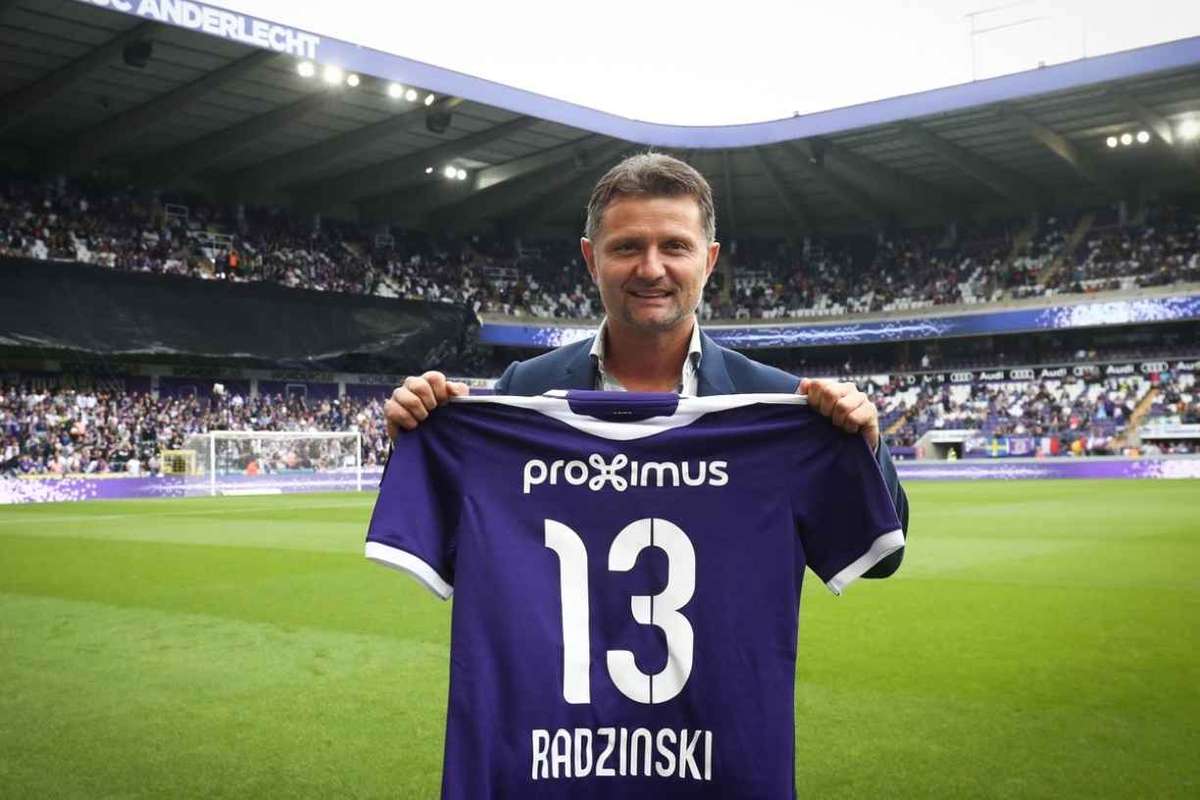
"It is an exciting time to be a Canadian supporter, and as an ex-player, I love it, because I have so many Canadians playing in Belgium too. Promise David, Nathan Saliba at Anderlecht wearing the same number 13 I used to wear, and Luc de Fougerolles, the Fulham boy who also played in Belgium this season. It is exciting to see them compete in the Belgian league and now do so well at the World Cup."
Jonathan David has become one of the deadliest finishers Canada has produced. What impresses you most about his development?
"When he started his career at Gent at 18, it took him six to eight months to adjust to Belgian football. It is a tough, defensive, very tactical league, a little like Italy. The strikers do not get much space, you have to find it. But he did a tremendous job. It took him two and a half years to become top scorer here, then he moved to France, another very tough league, and showed again that you do not need to be 1.90 metres to be a proper number nine.
"With his posture, his technical ability and his nose for goal, he turns half a chance into a full one. He scores in every competition.
The best teams in the world who play with one number nine are looking at this profile. A few years ago, when Arsenal were searching for a striker to fit their style, I was hoping he would go there, because it would have helped him challenge for the title even then. Many number nines will retire after this World Cup, and I think he can be the direct replacement for someone like Lewandowski."
Could he do for Canada what Lewandowski did for Poland, become the player who permanently changes how the world sees the national team?
"Alphonso Davies has already been at Bayern since he was 17, and at one point, his market value was more than 120 million euros for a left back. But David definitely has it in him. My very last game for Canada, I was captain in Poland, and it was around Lewandowski's first or second international, in Bydgoszcz.
"At 18 you never know how a career will turn out, but knowing what David has already produced, I believe he can become a Lewandowski, one of the best number nines in the world. He can score with his head, even if he is a few centimetres short of being the main target for crosses. His timing and his finishing are so good. Look at his first goal against Qatar. You just have to want it more than the defender, and he is right there with the best of them."
He is 26, still young. Where do you see him next? You mentioned Arsenal. Could Spain or the Premier League be the right step?
"The Spanish league would be perfect for him, very technical, the ball would be served to him nicely at a top team. But I also see him in the Premier League, because there is more space. The central defenders are tall and big, and they can struggle to turn and make that half a step, which is a big difference in modern football. He is fast and quick enough in his reactions to make life very difficult for any Premier League defender.
"I do not think the Italian league is the best match for him, even though Juventus is one of the biggest clubs in the world. Belgian players tell me it is very defensive and tactical; they think more about not conceding than scoring. At a club that size, if you do not make your mark in the first few games, you may not get another chance, because five more players are competing for your spot.
"He was just a little unlucky this year. Hopefully the World Cup gives him wings and a move to a league he will enjoy, and that will enjoy him."
Is Alphonso Davies already the greatest Canadian footballer ever, or is it too early? Or do you have another candidate?
"If you had asked me just before the World Cup, I would have said yes, because of what he has achieved and how he performs. Six or seven years at Bayern Munich, almost always the first choice unless he is injured. I just hope he is not injury-prone, because at a club like Bayern, if you are out for too long on a regular basis, they will look for a replacement.
"They compete on every front. But since he was 16 or 17, when I went to a Canada training camp in Nottawasaga, an hour north of Toronto, and watched him in friendlies, I thought, where did you find this guy? It did not take him long to move from there to Vancouver and then to Bayern. Two weeks ago I would have said he is the undisputed best Canadian ever to grace a pitch. But we may have new heroes after this World Cup.
"Jonathan is a joint top scorer with three goals. Imagine he scores a few more. Sometimes five or six goals wins you the Golden Boot, and if he does that, then for me as a striker, he becomes the best Canadian ever."
Who is the most underrated player in the Canadian squad?
"Right now, for me, it is Promise David. He has been out injured for a long time, but he is a striker who came out of nowhere. I believe he was in the second division in Estonia when Union Saint-Gilloise, last year's Belgian champions, announced they were signing this Canadian. I thought it was an interesting choice.
"Again it took him about six months to understand the football here, and then he scored 19 goals last season. By January this year he already had nine or ten before the injury, so he would have made another 20. If you score 20 in Belgium, you are flying.
I always lean towards strikers, but Alistair Johnston has also taken his game to a new level. He plays in Scotland and he was outstanding for Canada. It is never easy to be a right back and mean something to a team, but the way he applied himself, the assist for the first goal, what he did defensively and going forward, I thought, there is music on the right side. We miss a little of that on the left, but there is music in this team.
"I stayed up all night to watch them, with the nine-hour time difference, and I enjoyed every minute. I hope against Switzerland it is the same, and that Marsch keeps playing two strikers. If he does, he has won another fan here."
When you joined the national team in the '90s, did you feel Canadian players had to be twice as good to get noticed in Europe?
"Twice was not enough. It had to be four times as hard. In the '90s, Canada did not even have a proper league, sometimes six teams, sometimes eight. My luck was a tournament with the Olympic team, the Jeux de la Francophonie in Paris. My dad contacted an agent, the world-class Polish player Lubański, who was based in Belgium. He came to scout me in Paris, it is only two and a half hours by car, and said there was potential.
"He took me to Belgium for three weeks of testing at two clubs, and after that I got my first one-season contract. The rest is history. It was not easy, because everyone thinks Canada means ice hockey, maybe a bit of basketball and baseball. The Toronto Blue Jays won the World Series twice in a row, so baseball was popular.
"But soccer, absolutely not. So I am glad that today, around 85% of the players choose to go to Europe, in what many would agree are better competitions than MLS. I am glad they found a way across the pond."
You were born in Poland. Did you ever get an offer to play for the Polish national team?
"When you are in Canada and nobody knows you are Polish, and you have not played internationally, the chances were nonexistent. By the time people knew I was a Canadian born in Poland, it was too late. Back then one minute for a national team was enough to be considered Canadian rather than Polish. So nobody ever asked me that question."
At Anderlecht, you scored more than 20 goals and finished as the league's top scorer. Was that the season you peaked, or did you have a better one?
"That was the season that allowed me to move to the Premier League. We had a fantastic Champions League campaign, won a group that included Manchester United and PSV Eindhoven, and Dynamo Kyiv, then went through to the second group stage. Nobody expected that from us. I scored five goals in the Champions League and won the Belgian top-scorer award the same year, and that took me to the league I had always dreamed of.
"A small, fast striker between big, tall, relatively slow defenders, it felt like a dream come true. I peaked again a year or two later with Everton under David Moyes, although we never reached European football, neither at Everton nor at Fulham. So in terms of potential, maybe Anderlecht was the peak. But I loved my football in the Premier League, full stadiums every weekend, a fantastic atmosphere, it felt like you were playing European football week in, week out."
How good was Jan Koller before the rest of Europe discovered him?
"It was surreal at first to see someone of his stature on a football field. Two metres and three centimetres. When I lined up next to him in our boots, there was still space for me to breathe. In the beginning, you wonder what to do with a guy like that. Will our football become kick and rush, will we only put in crosses? But there was far more to Jan than that. His feet were not great at first, but that changed very fast, because at Anderlecht you have to adjust.
"He was very strong, fantastic with his head, and if the ball went to his feet you had to run around him before you even reached it. We complemented each other very well, and not only on the pitch. We went to concerts together, to the bar, out to eat. A good connection off the pitch helps you on it. Even now, when people recognise me here in Belgium, they ask, "Where is Jan?" There is no me without Jan, and most of the time no Jan without me. That is the duo everybody in Belgium remembers."
You moved to Everton. How did David Moyes change the club when he arrived?
"With Walter Smith it was a bit more old school. He had a game plan and we implemented it, but we did not work specifically on certain aspects of the game. When Moyes came, I remember being quite bored in training, because we did so much set-piece work. Free kicks, corners, defending and attacking them. Being on the smaller side, I did not have to do much of either, so on cold, rainy days in Liverpool I would spend half an hour just juggling the ball. But it made a difference.
"Look at Arsenal winning the league this year on the back of their set pieces, you can count five, six, seven games they won that way. Moyes saw that very early in the 2000s, and it is why he became one of the longest reigning coaches in Premier League history, the longest at Everton, though do not quote me on the exact figure. He is back at Everton now, which tells you he has done a tremendous job. He is someone I look up to, except for those half-hours once or twice a week when I was bored."
What was your first impression of Wayne Rooney when he arrived in the first team?
"We had heard about him before he arrived, because a few of the lads used to go and watch the youth teams. One evening they told me, there is this boy of 15 or 16, you should come and watch him, he is coming to us soon. It was not long before he trained with the first team, and you could see straight away he was ready.
"The gap was just the stress of 30,000 fans in a stadium, which took him a little longer to handle, but once he arrived, he arrived. A phenomenal talent, what a right foot. In preseason, we did sprints, 50 or 100 yards, and he was almost as quick as me, which you would never guess because he looked a little chunky early on. He became more muscular later, but he was deceptively fast and strong, and he could sustain a sprint. He was always trying to catch me in training, and hopefully that helped make him a faster player too."
Would you call him the best English player ever?
"I believe so, yes. It is a strange thing to judge. For goalscoring you have Harry Kane now, the best England have had for many years, after Alan Shearer. England have many great players and picking one is difficult, but Rooney is definitely up there.
"At some point your career finishes. He did not play until 41 like Ronaldo or 39 like Messi, otherwise he might have been at this World Cup too. An amazing talent. I was privileged to play with him, and he did not learn anything from me, just the speed."
Tell me about your Everton teammate Thomas Gravesen. He was famously wild. Did you ever imagine he would end up at Real Madrid?
"Football is a very strange world. He was my friend. We were both single in Liverpool, so we spent a lot of time together after training, going to eat, to parties, sometimes to a casino. He was a little loco, as the Spanish would say, but that is private. I still love him to bits, even though I have had no contact with Tommy for ten years. He disappeared from planet Earth for a lot of guys.
"When he moved to Real Madrid we went to visit him. It may not have been the perfect match, but I do not think it was the worst either, because every great team needs someone who will do everything, who will run for three players and tackle everybody, someone the opposition fears. Carlos Puyol was a little like that for Barcelona. You need players like that. You do not have to be technically perfect, you just put in the effort so the team can profit.
"Was I surprised? Absolutely. A bad choice? I do not think so. If it were, the coaches would not have picked him for so many games. Well done to him, another friend who made it to the top of world football."
Who was the toughest defender you faced in the Premier League? Your era had Rio Ferdinand, John Terry, Jaap Stam, Sol Campbell.
"It is hard to name one player, because a defence is two, three, four defenders, and the real difficulty is playing against a well-positioned line where someone always covers for a teammate. I never enjoyed playing Manchester United. Rio Ferdinand and Mikaël Silvestre together were very tough. Silvestre was not the biggest, but very strong and very fast, so even if I had half a metre on him, he would recover. Rio read the game so well. Against that pairing I would barely create a chance for myself."
At Fulham, you played with Edwin van der Sar. Did you already see a future Manchester United goalkeeper in training?
"He came from Juventus to Fulham. I will tell you how I saw him in training. When we got to shoot on goal at the end of a session and he was in goal, I would genuinely ask myself whether there was any space to put the ball. He is big, but more than that, his positioning was so good that, depending on where I stood and how my body turned, he already knew more or less what I was going to do. I thought, if I score against him one time in 10, I am doing well.
"My biggest surprise was when he got benched at Fulham for three or four weeks because we were conceding goals, as if it were his fault. It was not. Him going to United was no surprise at all, he was that good, and he proved it there. A year later, I played against him, had a free header from two yards, and clipped it onto the crossbar and out. That would have been my only chance to score against Edwin, and I missed it.
"Thankfully we stayed in touch, became friends, and two weeks ago he was here in Belgium and we went out to eat with our wives. Very nice."
Can we fairly compare the Premier League of the early 2000s with today?
"Everything evolves, but the Premier League stays the Premier League, still the best league in the world when you take every team in it, and it has only got better. The biggest change is the speed. Between 2001 and 2008 I already noticed that the big, tall central defenders who once struggled to turn and sprint had improved hugely. Now look at someone like Micky van de Ven at Tottenham, probably the fastest tall defender I have ever seen. He has no problem against the Dokus and the Sakas, he can turn and go with them.
"Training and nutrition have changed everything, because if you do not adapt you will not survive. Vincent Kompany was already fantastic six or seven years ago at City, a big, heavy lad nobody expected could turn and match the fastest players. The speed of execution has gone through the roof. You can see it in Aston Villa, Crystal Palace and Arsenal all reaching European finals. You would not rate Crystal Palace as a big team, with respect to their fans, but it does not matter which corner of the Premier League you are in.
"Among the top 15 teams the differences are minimal. It comes down to set pieces, small tactical tweaks and individual brilliance. I love the Premier League, I love watching it, and I do commentary on it for Belgian TV. I love Spanish football too, the technical side, but unless it is the Clasico I will take the Premier League. Count me in for another exciting season."
Last one. Which club felt more like home, Everton or Fulham?
"Everton felt more like home, mainly because there I played in my position, as a striker. At Fulham, although I loved the coach Chris Coleman, who was one of us, only two or three years older and the one who made everyone feel welcome, I played wide on the wing and had to defend more than attack, which I did not enjoy. When you score goals regularly you feel more at home, because that is my type of game. So if I had to choose, Everton was where my home was."