


Redknapp's Gold Cup dream sparked by late grandmother
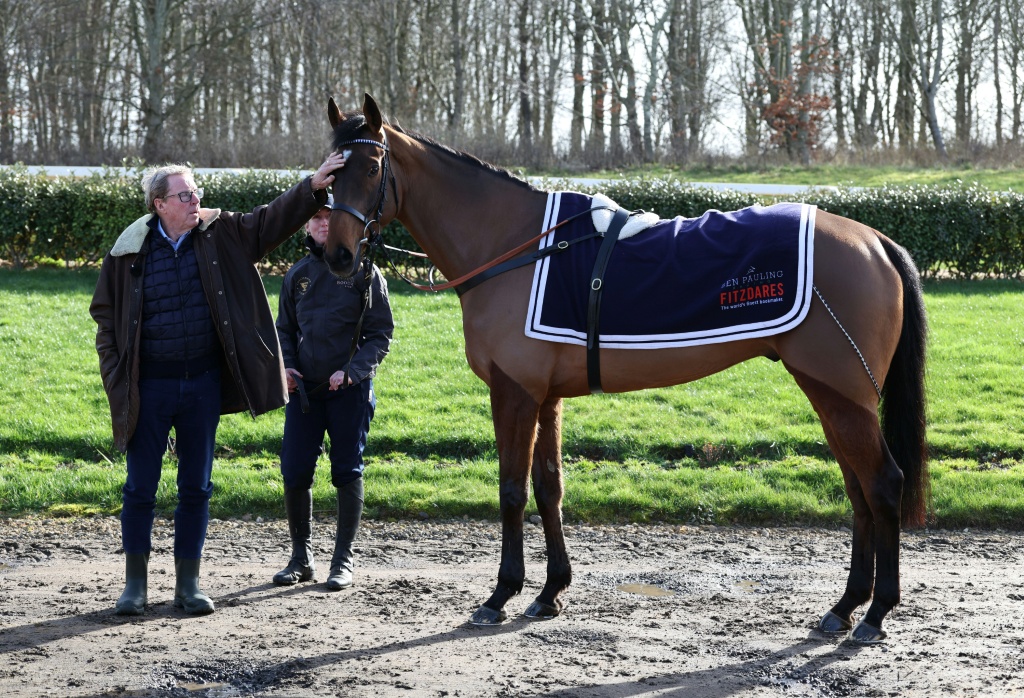
Football legend Harry Redknapp shared with AFP how his late grandmother ignited his passion for horse racing, saying she "would not have believed" that he now owns a contender in the Cheltenham Gold Cup.
His horse, The Jukebox Man, is among the top favourites for this prestigious event, seen as the pinnacle of jump racing and the highlight of the Cheltenham Festival on 13 March.
"Winning it would be like a dream come true," Redknapp remarked.
"Racing means a lot to me. Sure, football has defined my career, but the Gold Cup would hold a truly unique place."
The horse, under the guidance of trainer Ben Pauling, previously triumphed in the renowned King George VI Chase back in December, an achievement Redknapp described as exceeding his greatest expectations.
The affection for the 'Sport of Kings' began with his grandmother, Maggie Brown, during the 1950s.
Redknapp, celebrated for leading Portsmouth to victory in the 2008 FA Cup, noted that she could hardly have foreseen this path taking him into the upper echelons of jump racing circles.
"She raised ten children in London's East End and endured the hardships of the war like everyone else," Redknapp explained, having observed The Jukebox Man in action at Pauling's yard close to Cheltenham on Monday.
"The idea of me socialising with top figures and having a horse in the Gold Cup would astonish her."
Redknapp, once a candidate for the England job in 2012, recalled how Brown handled wagers for a local bookmaker named Cyril the paperboy, an activity that was against the law then.
"She was wonderful," Redknapp said fondly.
"Betting was her passion, placing small wagers and collecting them from the neighbourhood women.
"Cyril, in his sixties yet still known as the paperboy, would arrive calling out 'Star and Evening Standard' in his distinctive way, trilby hat on, suited up with polished shoes, and she would pass on the bets."
I lost him
Despite her enthusiasm, Brown ensured Redknapp stayed involved and active.
"She would visit for meals and ask me to select three horses from the newspaper," Redknapp remembered.
"I was too young to read or write properly, yet I chose horses for her bets.
"Back then, selecting horses was more guesswork than any real method."
That said, Brown was not the only family member to strike lucky.
Redknapp's mother, employed at a cake factory, won big with 100/1 outsider Foinavon in a 1967 Grand National sweepstake.
The horse crossed the finish line unchallenged after dodging a chaotic fall at the 23rd fence out of 30, a spot now bearing his name.
The celebrations must have reverberated through their home.
Turning 79 on 2 March, Redknapp has owned horses since his days managing Bournemouth in the mid 1980s, experiencing highs and lows along the way.
"I once had a promising horse named Bygones In Brid with trainer Alan King," he recounted.
"At the first obstacle, blinded by the glaring sun, he crashed into it and could not recover.
"That was the end for him; I lost him that day.
"Racing has its ups and downs, does it not?"
Redknapp draws parallels between managing a football team and training horses.
"The key is having reliable team members, maximising their potential, caring for them, and ensuring they feel valued in their roles," he commented.
"Pauling seems to achieve that; his staff have stayed loyal for years and appear content in the setup."
One lingering disappointment is never placing a horse with ex England player Mick Channon, who had notable flat racing successes.
Still, they shared an unforgettable outing at Salisbury, joined by notorious reveller and Northern Irish football star George Best.
"George was with Bournemouth at the time," Redknapp recalled.
"We spent the day with Bally, that is 1966 World Cup hero Alan Ball, and Channon, winding up in a nearby pub by nine in the evening after the races.
"How we made it back is anyone's guess!"