


Power, pace and financial muscle: How Premier League sides are ruling Europe
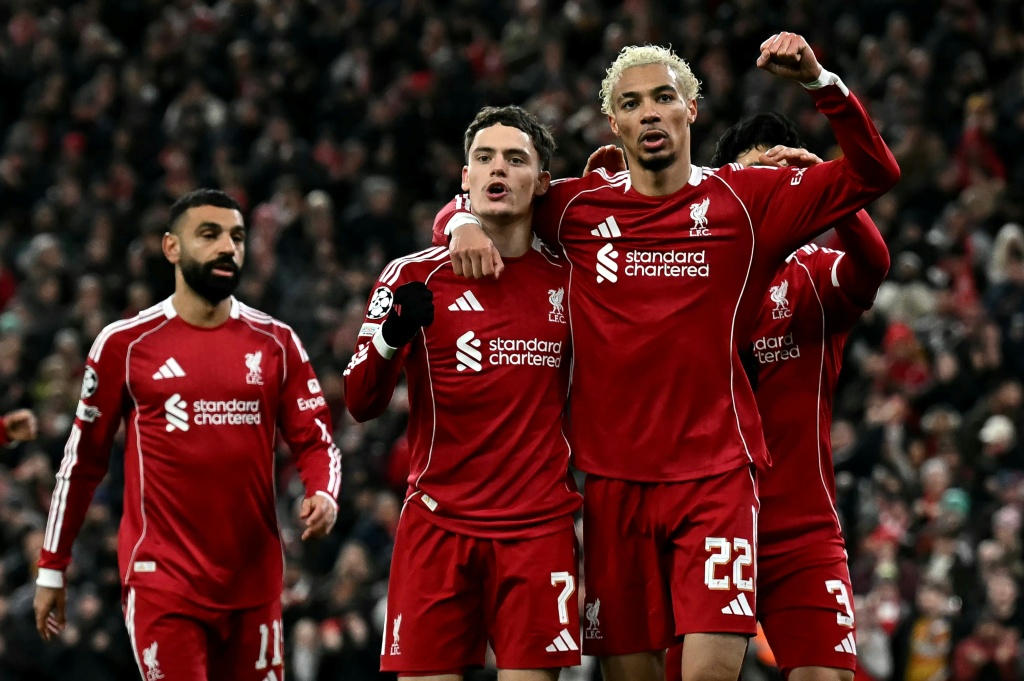
Clubs from the Premier League have shown their strength both on the pitch and in financial terms across Europe, as five English teams ended up in the top eight spots after the Champions League group stage.
Teams like Arsenal, Liverpool, Tottenham, Manchester City, Newcastle, and Chelsea achieved a better win rate in their eight Champions League fixtures compared to their performances in the current Premier League season.
Under the guidance of Mikel Arteta, Arsenal became the inaugural team to secure a flawless record of eight wins in the league phase of the new format, and Tottenham, Liverpool, Chelsea, and City all advanced straight to the knockout round of 16.
Newcastle will need to go through a play-off in the coming month, but their group stage showing suggests they have reason for confidence.
"We have been saying for several years now that the Premier League stands as the strongest league globally, and this serves as further proof without question," commented Tottenham's manager Thomas Frank.
Supported by lucrative broadcasting agreements that outstrip those in other countries, Premier League outfits have maintained a clear economic edge over many European competitors for quite some time.
In the latest Deloitte Football Money League report, published just days ago, nine English clubs ranked among the world's top 20 revenue generators for the previous season.
Five out of the six English participants who excelled in this year's Champions League featured in the top 10, while Newcastle, placed 17th, receives investment from the Saudi sovereign wealth fund.
Over the summer transfer period, expenditures by Premier League clubs reached a record peak, exceeding £3 billion ($4.1 billion), which was greater than the combined outlay from the Bundesliga, La Liga, Ligue 1, and Serie A.
Robust teams
This financial power has equipped English sides with extensive rosters, providing them with a major benefit amid a demanding schedule in football.
Villarreal currently holds fourth position in La Liga yet ended up near the bottom of the Champions League group, suffering defeats to Tottenham and City in a run of eight winless outings.
"We consider ourselves a Champions League calibre team, we featured a player with Spanish international experience, and then Crystal Palace, far from one of England's elite, arrived to take Yeremy Pino," remarked Villarreal's head coach Marcelino. "For a considerable fee and offering wages beyond what any Spanish club could afford."
Beyond their economic dominance, English teams often overpower opponents from the continent through sheer physical presence on the field.
Arsenal easily won 3-1 at Inter Milan, last season's Champions League runners-up, even while fielding mostly reserve players last week.
"They displayed greater energy, skill, and speed," noted Inter's manager Cristian Chivu. "I could highlight their spending, but that seems too evident, yet the Premier League brings a distinct level of vigour and tempo unlike Italian football."
The achievements of Premier League clubs in European competition this term have occurred even as some have struggled domestically.
Tottenham, sitting 14th in the Premier League standings, claimed fourth place in the Champions League, whereas Liverpool overcame Real Madrid, Atletico Madrid, and Inter to grab third, a stark difference from their disappointing title challenge at home.
"The Premier League has grown even more demanding physically than before," explained Newcastle's forward Anthony Gordon when discussing the contrasts between the two tournaments.
The England winger has found the net six times in this season's Champions League but has gone over a year without scoring from open play in the Premier League.
"It can feel like a basketball match at times, so unyielding in its physical demands," he added. "Control is limited. It turns into a test of endurance and battles, where prevailing in those clashes decides the outcome."
However, such intensity can wear down players in the later Champions League stages, especially after eight months of non-stop matches.
This is when they encounter established European giants like Real Madrid, Bayern Munich, Barcelona, and Paris Saint-Germain, teams equipped to rival the Premier League's finest.
These powerhouses have limited English triumphs in Europe's premier club competition to just three in the last 13 years, offering reassurance against fears of complete English control.