


OPINION: Fancy some momentum? Have an advert instead. Making sense of 'hydration' breaks
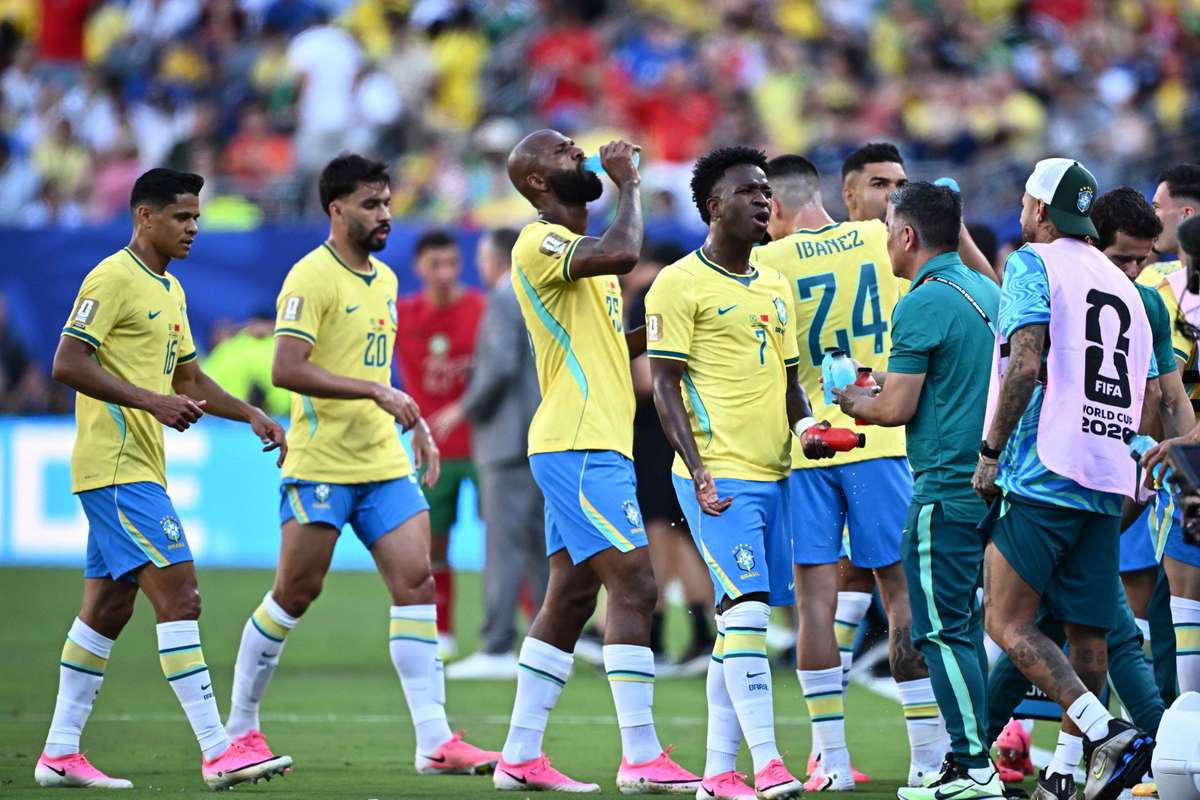
Around the 22 minute mark of each half at this World Cup, everyone is instructed to pause and take a drink. Three minutes, once per half, every match, without exception.
FIFA has mandated it, citing the heat and humidity in America, and dressed it up in the language of player welfare. It is hard to argue with player welfare, so we won't. However, we absolutely should argue with everything surrounding it.
The first issue is that the breaks are compulsory regardless of the actual conditions. Mexico played at a comfortable 20 degrees and were still taken off for a break. Another match was played at 16 degrees, and do not even get us started on matches taking place in a stadium with a roof and functional air conditioning.
If this were genuinely about temperature, you would set a threshold (perhaps 25 degrees and above) and only apply the break when it is exceeded. That rule, however, does not exist. A welfare measure that disregards the weather is not truly a welfare measure.
If we set aside that absurdity, we must pause at a more crucial point: what these breaks do to the actual football, and that is that they kill momentum.
Football is one of the most smoothly flowing sports in the world. Momentum surges. One team gets on top, pins the opposition back, they can sense a goal coming... And then there is a whistle and everyone has to fetch a bottle for a few minutes. The side under pressure gets a free 'half time' to reorganise.
We saw that with South Korea against Czechia. The Czechs were pressing, the break came, and the game went flat. Curacao sensationally equalised against Germany, but instead of building on that and piling more pressure on the European giants, they almost immediately had to endure a cooling break that extinguished any signs of their momentum.
Now I am not saying Curacao had Die Mannschaft on the ropes. The match ended 7-1 to the Germans in the end for a plethora of reasons. But you are noticing the pattern there, right?
Of course, like any new feature or addition to the rulebook, teams will eventually learn to exploit this. If you are holding on, you slow the game down, running down the clock until the official calls for a break.
One small upside is that coaches are allowed to speak to their players during this break, which might eliminate all the mysterious cramps goalkeepers develop when the gaffer wants to have a word about the tactics.
It would be ironic though, if time wasting is stopped by a full halt of play like in the NBA or the NHL. I am taking these two leagues as a direct example because the new hydration breaks seem to be understood by everyone as a step towards the 'Americanisation' of football. It splits the match into four quarters instead of two halves, quietly and unofficially, but effectively.
And of course, it uses something the NHL (and ice hockey all over the world) already bluntly calls an advert break.
That is what fans watching at home despise the most about these new moments, ultimately. What is announced as a measure to protect player safety is used to extract as much revenue as possible from the tournament. Without officially calling it an advert break, it has been used as such by many broadcasters who love a guaranteed stoppage. Fox in the US even cut back from the adverts straight into live play that it had already missed.
As one commenter on Reddit described it: it is just an advert with a water bottle in front of it.
For the people at the stadium, the three minute break might fly by as a moment where you can check your phone or dash to grab some refreshments (you cannot quite expect to return to your seat in time, though). For all the people watching at home, the rhythm of the match is broken and mercilessly monetised.
The real concern is not just the World Cup, but the precedent it sets. If player welfare in high temperatures is the official line, then fine. If we end up having breaks like these midway through every half all the time because the extra advert slot brings a nice chunk of money to the people running the show, then it is a problem.
Maybe I am being cynical and pessimistic, but it all looks less like a response to the heat and more like a revenue stream being tested.
The genie is already out of the bottle. It is just a water bottle this time.