


On Mexico City's streets, vendors fight to make it to World Cup
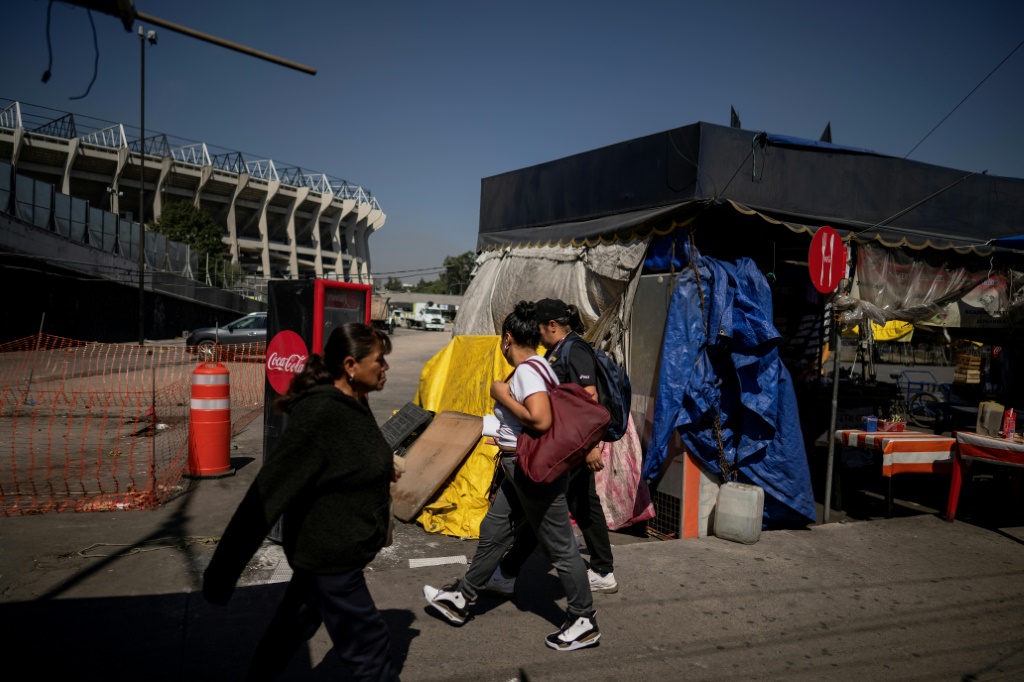
Mexico anticipates an economic boost from hosting games, including the opening match of the 2026 World Cup, yet the capital's famous street sellers view it as both a chance and a risk.
"I have no hopes at all," remarked Alejandra Zarazua, who worries about being removed from her usual location close to the Azteca Stadium, where she offers traditional Mexican jelly treats.
However, Japanese cook Satoru Hasuike, operating a noodle stall in the city, aims to work legitimately at the Azteca with a casual outdoor eating atmosphere.
Mexico will stage 13 fixtures in June and July, five of them in the capital.
The tourism department predicts the tournament will bring in almost $3 billion (2.6 billion euros) in financial gains.
In Mexico City, trading both within the venue, where FIFA, the global football authority, usually controls sellers, and nearby, is causing controversy.
Street food sellers form an essential part of the huge Mexican city and rank among its top draws for overseas tourists.
A recent official report estimated that 1.5 million individuals make their income from street selling in the sprawling metropolis.
Past conflicts have occurred. In 2007, city officials deployed riot police to remove roadside enterprises from the historic core.
Like the Mafia
Vendors with food carts around the Azteca Stadium are concerned they face removal once more.
"I am anxious about my survival," stated Zarazua, a 55 year old ex hospital employee, noting she received warnings to vacate the zone.
She mentioned developing a secondary strategy.
"Still, I realise I cannot even peddle while moving about," she added.
Roughly 20 booths in her vicinity are planned for transfer to a close by road, which is already crowded with ambulatory traders.
Close to the Azteca, on a walkway to the rail stop, staff have been removing rubbish from spots where, up to late October, numerous booths were positioned.
"They cleared it all in the dark hours. We have no idea where our belongings went," grieved an individual present since the 1980s who preferred anonymity due to potential backlash.
Another seller declined to speak with note takers.
"Keep them from spotting me sharing details," the seller murmured, then continued: "This operates like a Mafia. Huge sums are at stake. You must pay off the bosses and officials.
"FIFA dislikes us, which is why they are ousting us."
An authority informed AFP that sellers will be shifted to another place, noting discussions are ongoing to decide their new position.
The booths lack formal authorisations. They are deemed "permitted informally," leaving owners vulnerable.
Nevertheless, some ambulatory sellers see the World Cup as a commercial prospect.
Always find a solution
Divided from the Azteca Stadium by just a barrier, the "El Estadio" deli showcases images of Brazilian icon Pele and Argentine star Diego Maradona, who triumphed in the 1970 and 1986 World Cups held in Mexico.
"I am studying English to cater to global customers," said proprietor Oscar Hernandez, though he is pondering other options if his establishment must shut.
"Being Mexican means you always devise a way. I will erect a cart two blocks off, and if forbidden, I will carry my sandwiches in a sack and offer them."
In another district of the city, the Roma Condesa area, popular with US tech nomads, Hasuike succeeds with his noodle outlet, attracting queues partly from his TikTok clips.
He expresses desire to function at the Azteca during games.
"I need to agree a deal with FIFA for an internal venue setup, not a cart, featuring an outdoor food feel," he explained, omitting the fee involved.