


Mexico unveils 100,000-strong security deployment for World Cup
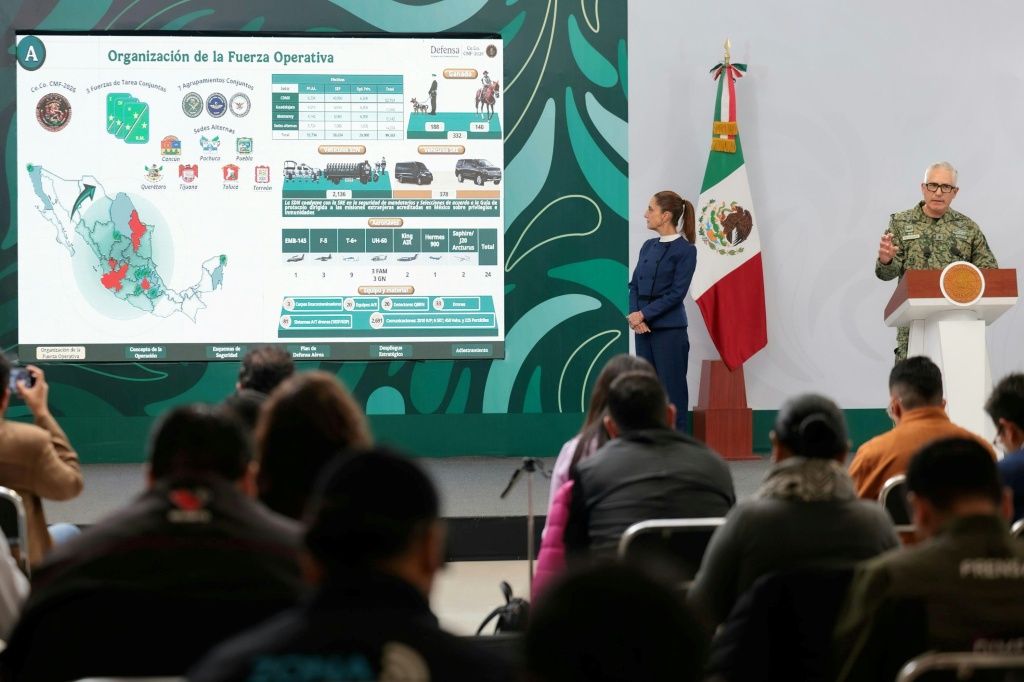
Mexico announced on Friday that it plans to station around 100,000 security staff to safeguard supporters during the football World Cup across three hosting locations, including Guadalajara, which has suffered from ongoing cartel conflicts.
The nation is jointly organising the largest World Cup ever, together with the United States and Canada, running from 11 June to 19 July.
The venues of Guadalajara in Jalisco state, Mexico City, and Monterrey in the northeast will accommodate 13 fixtures in total, starting with the inaugural game on 11 June at Azteca Stadium in the capital.
President Claudia Sheinbaum revealed the national security strategy shortly after a surge in unrest in Guadalajara and elsewhere, sparked by the demise of a prominent drug kingpin.
The disturbances bypassed Mexico City and Monterrey.
Sheinbaum disclosed the strategy at a military facility in Zapopan, near Guadalajara, where the army operation on 22 February led to the death of Nemesio "El Mencho" Oseguera, head of the notorious Jalisco New Generation Cartel.
Oseguera topped Mexico's most wanted list and was also pursued by the United States with a $15 million reward offered for his capture.
His burial took place on Monday in a golden coffin at a graveyard close to the Zapopan military site.
Following reports of his death, cartel affiliates launched widespread attacks.
They obstructed roadways across 20 of Mexico's 32 states, setting fire to cars and establishments, particularly in Guadalajara and the Jalisco coastal spot of Puerto Vallarta.
More than 70 individuals lost their lives amid the effort to apprehend Oseguera and the ensuing confrontations between authorities and cartel fighters.
Both FIFA and Sheinbaum have assured that the recent unrest poses no threat to the World Cup, emphasising safety for international attendees.
Anti-drone systems
Mexico anticipates drawing millions of tourists throughout the month-long event.
The scheme, dubbed Plan Kukulkan after the Mayan serpent god, encompasses the hosting areas plus adjacent leisure spots.
General Roman Villalvazo Barrios, who leads Mexico's World Cup security hub, explained that the force of nearly 100,000 will comprise 20,000 soldiers from the military and National Guard, 55,000 law enforcement officers, and personnel from private firms.
"This results in a combined force exceeding 99,000 members," he noted, while highlighting joint efforts with the United States and Canada on protective measures.
The initiative will utilise approximately 2,500 army and civil vehicles, 24 planes, anti-drone technology, and canines skilled in identifying explosives and various materials, according to him.
Very reassured
Guadalajara ranks among the hardest-hit Mexican regions by cartel-related turmoil.
Reports indicate over 12,575 disappearances in the state, with many victims abducted or slain by organised armed units.
In the wake of Oseguera's death, FIFA acted swiftly to counter rumours of relocating matches from Guadalajara, scheduled for four games.
FIFA president Gianni Infantino expressed to AFP, just two days post the incident, that he felt "very reassured" regarding Mexico's role in the competition.
Infantino held a telephone discussion with Sheinbaum on 26 February concerning tournament arrangements.
Additionally, on Thursday, Security Minister Omar Garcia Harfuch conferred with FIFA officials.