


Football-Australia and Japan Women's Sides Claim AFC Overlooks Pay Disparity Issues
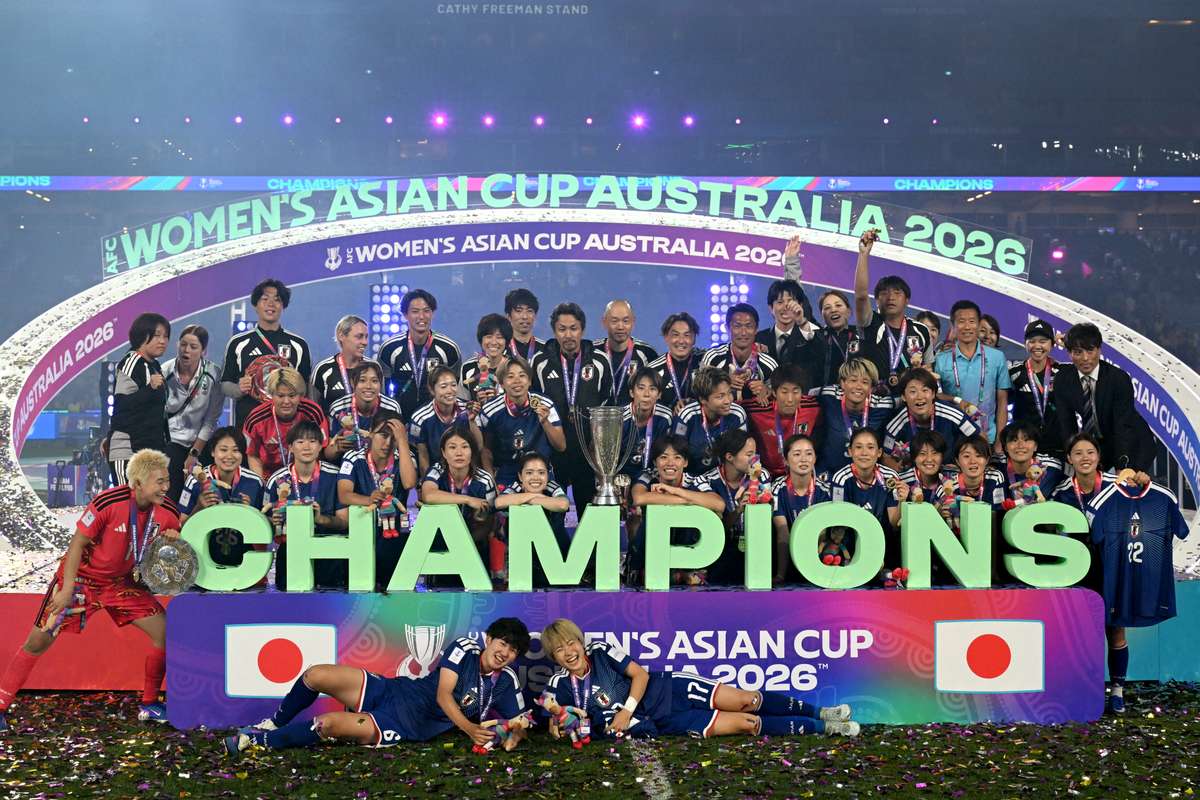
The female squads urged the international authority FIFA to achieve its goal of equal prize funds for the men's and women's World Cups.
The twelve countries participating in the four-yearly Asian Cup, organised in Australia, vied for a US$1.8m reward, roughly 12 per cent of the sum offered at the 2023 men's Asian Cup in Qatar.
This represented the smallest payout among recent women's regional events, just over half the amount for the 2024 Africa Cup of Nations (US$3.47m).
"Even with the triumph of this event, it stays the least remunerative regional competition globally, and the disparity between the men's and women's sport persists," stated the women's teams from Australia and Japan.
"Our earlier request to the AFC for collaboration on equal rewards, a fixed portion for every player, and joint creation of a permanent impact has been disregarded thus far."
The AFC chose not to respond.
Although the organisation has advanced women's football by introducing the Women's Champions League in 2024, detractors argue that advancements are inconsistent, with rewards continuing as a major concern.
The men's World Cup from June 11 to July 19 offers $727 million to the 48 teams in the United States, Canada, and Mexico.
The 2023 Women's World Cup with 32 teams in Australia and New Zealand featured $110 million.
In 2023, FIFA leader Gianni Infantino aimed for parity in prizes at future World Cups.
The upcoming women's event will occur in Brazil in 2027.
"Moving ahead, we anticipate FIFA fulfilling its commitment to identical prize funds for the 2027 FIFA Women’s World Cup, and we shall persist in advocating for fairness and dignity for female athletes in our area," declared Australia and Japan.
The Women's Asian Cup broke previous attendance figures, as Japan's victory in the final attracted 74,397 spectators to Stadium Australia in Sydney.
Yet the competition also exposed athletes' discontent regarding gender imbalances in support.
South Korea's squad considered boycotting the Asian Cup last year due to facilities.
India's female players received kits meant for youth squads, prompting organisers to hastily arrange local production.
"This event unfolded amid genuine obstacles that the AFC and athletes must tackle collaboratively," noted Australia and Japan.