


EXCLUSIVE: Keith Hackett discusses World Cup pressure and referees as 'event managers'
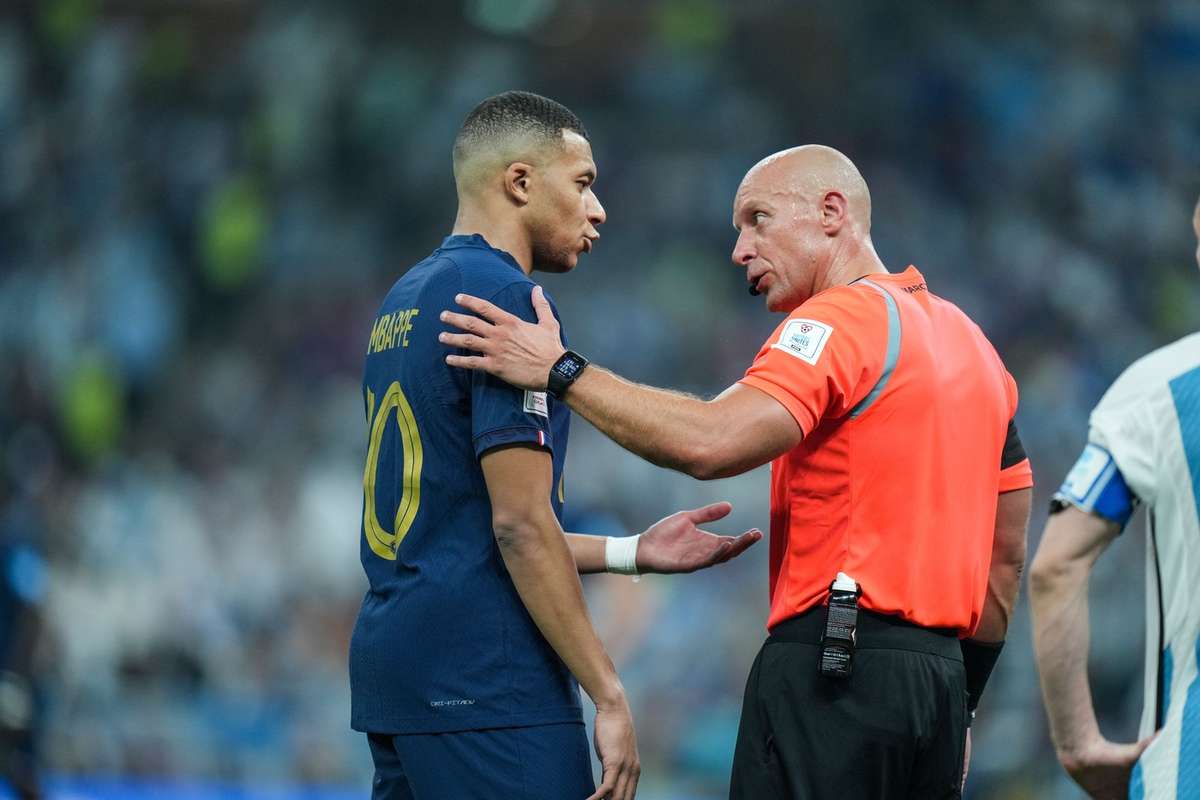
The ex-chairman of PGMOL will be our officiating authority during the World Cup, scrutinising the performances of the match officials.
This edition of the World Cup features 104 matches spread across the largest geographic area ever seen in the tournament. What psychological impact does this number of high-pressure games have on referees? Does tiredness set in, or does adrenaline keep them going?
"The battle to be chosen is fierce and highly competitive. The performances of the officials have been tracked closely for several years and have faced rigorous examination. Pierluigi Collina and Massimo Busacca, FIFA's Director of Refereeing, have conducted numerous workshops to assess fitness levels and promote consistent enforcement of the rules. Online engagement and quizzes on the laws of the game are also part of the preparation, alongside guidance on fitness and nutrition.
Fitness assessments are conducted at every gathering, and each official is provided with physical and mental support. Vision experts are also brought in to evaluate aspects such as peripheral eyesight.
During matches, the distances covered by officials are tracked, as well as their speed and movement patterns. Their recovery data is also recorded to ensure that no official is assigned to a match if they exhibit signs of exhaustion. I anticipate referees covering an average of 11.5 kilometres per match, with more than 1,000 metres of explosive sprints at speeds exceeding seven metres per second.
The quality of correct decision-making relies on four elements: seeing, recognising, thinking, and acting. When I was in charge of PGMOL, I could access movement and speed data during a match. FIFA will be collecting similar statistics from each performance.
One aspect I hope has been addressed is the matches scheduled in Mexico. The Azteca Stadium sits at 7,000 feet above sea level, so extra preparation and acclimatisation need to be incorporated into the assignment process for those games.
Jarred Gillett, a Premier League referee, is one of those chosen to work as a VAR official, stationed at the Match Control Room Centre in Dallas."
The World Cup final represents the ultimate achievement for a referee. What distinguishes those who flourish from those who succumb to the pressure of the moment?
"Many of the chosen officials are considered the finest in their own nation, and some are the top performers across their entire confederation. They will have taken charge of hundreds of matches, developing the skill and mental resilience required to cope with a World Cup assignment.
At the highest level, referees function as event managers. You must not only enforce the laws of the game to a high standard, but also handle disputes and player conduct, and make sure the match starts at precisely the scheduled time.
Before the match begins, during the exchange of team sheets, there will be a meeting with security to address any possible scenarios and the 'what if' questions that are part of the pre-match plan. The officiating team will also have conducted a thorough meeting to prepare their performance, involving extensive discussion about the roles of the assistant referees, VAR, and the fourth official."
With 170 officials participating across 104 matches, how crucial is it for the on-field referee and the VAR team to be consistent?
"The chosen officials will have taken part in multiple FIFA workshops and been engaged in an online training course examining different incidents. Video clips are shown to help achieve uniformity in decision-making.
Handball incidents, foul challenges ranging from careless to serious foul play, grappling at corners, and offside decisions are all reviewed and debated in depth to achieve consistency throughout the large group of officials. VAR operators will have undergone extra training with the same objective. Anyone who fails to follow the directives from Collina and Busacca may find themselves heading home early.
A further challenge is the introduction of the new Laws of the Game, which adds an extra dimension of preparation for all those involved."
Referees face greater scrutiny than ever before, with camera perspectives analysing every decision within moments. Does that level of exposure make the role fundamentally different from the one you knew?
"Football has transformed enormously since I officiated my final match in 1995, following 23 years at the top level. I played a part in establishing the first cohort of professional referees, persuading the Premier League to fund what later became PGMOL. With input from sports science, sports psychology, and a vision scientist, that investment significantly improved standards.
I also brought in three technologies to aid decision-making. First, communication kits that allowed referees and assistants to talk to each other. Second, goal-line technology, which I worked on closely with Professor Paul Hawkins of Hawkeye and Mike Foster, a director at the Premier League, with former Arsenal director David Dein doing an excellent job convincing FIFA General Secretary Sepp Blatter to grant approval. Third, Prozone Referee, which delivered performance insights on match officials.
With specialist VAR operators and the semi-automated offside system now active, along with the Adidas chip inside the ball, I am hopeful that we will see a significant improvement in how VAR operates. I also trust that the communication connections between the VAR hub in Dallas and the stadiums in Mexico and Canada will function without problems."
Szymon Marciniak officiated the 2022 World Cup final and will be back in 2026. Is there a risk of depending too heavily on established figures, or is such high-level experience simply impossible to replace?
"Experience is a tremendous advantage in refereeing, as in life generally. Marciniak is vastly experienced and will offer priceless knowledge to his fellow officials, with Collina himself, naturally, having been a World Cup final referee.
Having hundreds of matches under your belt is a major benefit when dealing with the pressures that flare up during a game. Experience allows you to function with less anxiety when a crucial decision is required, to make it correctly and to communicate it with conviction. It enables you to understand the flow of the match, take up the optimal position, and handle players and the occasion calmly."
England will have both Anthony Taylor and Michael Oliver at the tournament. In your opinion, which one is better equipped for the challenges of knockout football on the global stage?
"Both are the leading Premier League referees and have officiated major matches at home and abroad. They are both extremely fit and work in a composed and mature fashion.
Anthony Taylor attracted global attention when Christian Eriksen suffered a cardiac arrest during Denmark's Euro 2020 match against Finland. Taylor's part in summoning medical personnel onto the field swiftly was commended worldwide.
Michael Oliver is a referee for high-stakes matches, well adapted to the international arena, with a knack for elevating his performance when it matters most. He displays considerable maturity and calmness while refereeing and will thoroughly enjoy this tournament. Both men merit their places."
Daniel Siebert officiated the Champions League final yet was not selected for the World Cup. Did that come as a surprise to you?
"FIFA will have possessed comprehensive reports on Siebert's performances in domestic and international competitions. His appointment for the European final was a strong indication that UEFA's Director of Refereeing held him in high regard, and his showing in that match was superb. The confidence that Rossetti placed in him was justified.
The sense of letdown he must have experienced at being omitted is heartbreaking. He ought to be at the World Cup. Nevertheless, it highlights just how fiercely competitive refereeing is at the elite tier. There are only a limited number of slots, and the difference between those selected and those overlooked is incredibly narrow.
I have officiated plenty of major matches myself, and it would be inhuman not to feel pressure during those minutes in the dressing room before kick-off. I used to shave ten minutes before I rang the bell, then sit in silence with my eyes shut, visualising the upcoming match.
There is no greater sensation than surveying the pitch before kick-off and observing the exceptional players you will be overseeing."
Refereeing is among the rare positions in sport where an error is instantly seen by millions and shown repeatedly. What advice would you give to young officials about handling mistakes and bouncing back?
"Referees are human and they will inevitably err. The key is to instantly set aside whatever mistake you believe you have made, right there on the pitch during the game. If you let it remain at the forefront of your mind, your performance and focus will diminish. Confidence wanes, body language becomes poor, and additional mistakes occur.
The capacity to recover in the moment is one of the most crucial abilities any referee can cultivate, and it is a skill that genuinely only matures with experience."