


EXCLUSIVE: Cacau reveals why he decided to play for Germany and his toughest moments
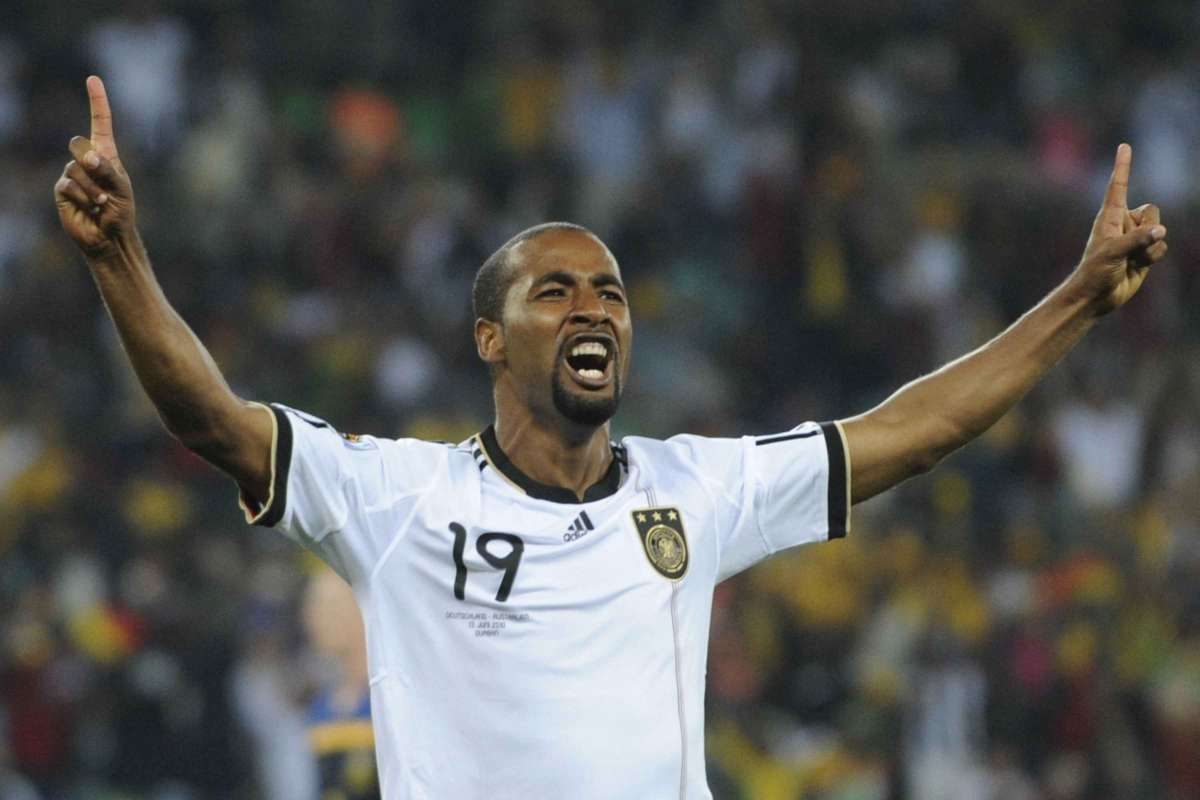
In an exclusive interview with Flashscore, Cacau reveals how he left the ground for the World Cup, how he survived at a fifth-division team that didn't pay wages, and how he became an eternal idol at Stuttgart (spending 11 seasons, including winning the club's last Bundesliga title in 2007).
The 45-year-old also spoke about his difficult childhood and revealed why the vuvuzela at the 2010 World Cup was a problem on the pitch.
You were born and raised in the interior of Sao Paulo, and started out in football at Palmeiras. How did it feel to wear the shirt of a national team from a country you probably never imagined living in as a child?
"It's really something indescribable. Something even unthinkable at the time. I came from a different path than many players do in Brazil. Many come bought or hired directly to play in the Bundesliga. I played for Palmeiras' youth team until the under-17s, then I was let go. I played in the lowlands of São Paulo. I had a short spell at Nacional-SP, and in 2000, I came to Germany to try and play here.
"I tried out for a fifth division team, a team from the Turkish colony, Turkgucu from Munich. I played in the fifth division, played in the fourth division for Nuremberg's B team, and managed to get into the Bundesliga through Nuremberg. Then came Stuttgart, I won the Bundesliga, and I made the German national team.
"And I'm a big fan of the World Cup. I remember when I was nine years old, I cried when Brazil were eliminated against Argentina in the 90th World Cup. I cried even more when we won the World Cup in 94. Then, of course, you grow up, you play, you don't have that vibe like you did when you were little, but I always dreamed of the World Cup.
"Having the opportunity to become a naturalised German, to be called up to the German national team, to take part in a World Cup, is something that is still surreal for me today. Because you're in a different country, a top footballing country, so the quality has to be there, it's not just "naturalised, go play".
"To be able to play for this country, to be received well, to be able to represent it in what was a historic World Cup in Africa, is something that fills me with pride to this day.
When Joachim Low, Germany's coach at the time, called you up to the national team, was there any conflict in your mind, or was it an easy decision?
"Look, it's obvious, I grew up with the Brazilian national team, I wanted to play for the Brazilian national team, but career paths end up taking us in directions we sometimes don't imagine.
When the invitation came, I wanted to be sure that I wouldn't really get the chance to play for Brazil. I wanted to be sure that I was making the right decision. I was in contact with Jorginho, the right-back who was Dunga's assistant in the national team at the time, and so I wrote to him. I didn't want to ask him directly, I just went through the motions: "Oh, just so you know, I've been called up here, the coach has called me up, I'm going over there to the national team".
"He said, "Well, mate, I'm really pleased, congratulations, go on, success to you." (Laughs). For me, it was the answer that, ok, I probably won't get this chance in the Brazilian national team and I'm going to accept this invitation. And I accepted wholeheartedly and I always say with conviction that Germany adopted me and I played my heart out."
You arrived in Munich to play for a 5th Division team. Did you think about quitting when they stopped paying you for seven months?
"There were some really difficult times. I was paid very little, 500 marks a month, which is about 250 euros. I lived with a friend who took me in at the time and fed me and helped me on a daily basis. I then went seven months without pay, training in the snow...
"Even so, with all the difficulties, I didn't think about giving up. The question of going back wasn't an option, because I didn't really have a future in Brazil."
What was your childhood dream when you started playing football?
"My dream was to play football and, through football, help my family. It was to give my mum a good life, to give my mum a house. And to have achieved that "early on" was very gratifying. And all the other things were consequences.
"Of course, you want to score goals, you want to win titles and everything, but it was also a question of survival, you know? The question of being successful was mixed with the question of wanting to give my family a future."
Did you have a very difficult childhood?
"I come from a poor family. My father, unfortunately, had a problem with alcohol and was hospitalised several times. My mum worked as a cleaner and did everything she could to raise us and give us the best. And we tried to repay her by doing well at school, and football was an outlet for me to feel valued and to create a path to a better future for her."
When you played in the lowlands in Brazil, you travelled through very dangerous areas of Sao Paulo. Doesn't a player who goes through that experience feel pressure when they enter a crowded Allianz Arena?
"It's another pressure, isn't it? (In elite football) It's a super positive pressure. I played there in Sao Miguel Paulista, Ermelino Matarazzo, Itaim Paulista. I remember there was a game, I scored a great left-footed goal from an angle, but it was in the middle of the favela, so I was happy to win, to score, but also happy to leave because of the danger.
"I played somewhere else, we were winning 4-0 and the guys there said, "Hey, mate, stop scoring, it's good, 4-0, you're humiliating us". What did I say? "Sorry", right? (laughs).
"All this shapes us. In professional football, it's different pressure, but you're in the stadium, you're on perfect grass, you're playing in front of 50,000 people. Of course, there's pressure; of course, you don't want to make mistakes, but we're talking about the seed you planted back then.
"You're harvesting it now and being able to play there, being able to win trophies is priceless. So they're different pressures, I'd say."
Do Brazilian players today not know how to deal with this pressure?
"I think there's a lack of awareness of what it would be like not to have this pressure, what it would be like not to have this pressure.
"Not having this pressure would mean playing in the lowlands, or not winning, it would mean being at a much lower level. You have to recognise that it really is a privilege to be there and to do what you have to do. Of course, there are other factors nowadays; players grow up with social media, so at 12, 13 years old, they're going to be the next Pelé, the next Ronaldinho Gaúcho, the next Neymar, so there's this pressure from an early age.
"Nowadays, I'm surprised some players talk about "too much pressure". Of course, the pressure is always on. A game where there's no pressure from the coach, no pressure from the fans, no pressure from the press, loses its magic."
What's the most pressure you've had to deal with in your career?
"Perhaps the most pressurised game for me, where I was happy to win, was against Ghana in the World Cup. We won the first game against Australia, lost the second against Serbia, and if we had lost against Ghana, it would have been the first time Germany had gone out at the group stage in a World Cup.
"I came on as a starter in that game, because Klose was sent off against Serbia, and man, there were over 90,000 people in the stadium, there were a billion people watching all over the world, everyone thinking, 'Are Germany going to go out in the group stage for the first time?" I remember walking into the stadium with my headphones on, music blasting, and talking to myself, "It's a normal game, go there, get in, it's what you've done all your life.
"But you have to prepare your mind, you can't let emotion take over, because otherwise you won't be able to play that game, be able to overcome that pressure. Being able to win the game and get to the next stage is something that makes you strong enough to face many other situations."
Was seeing your mum in the stadium at the World Cup almost as big an achievement as the goal?
"It was an emotional rollercoaster. First being shortlisted for the World Cup, then being called up, being able to play, getting into a game, being able to score in the World Cup, and halfway through, I ended up getting injured and missed the key games against England, Argentina and Spain.
"But even with the injury - I broke my rib, which was only recognised a long time later, unfortunately - I said, 'Well, third place, I'm going to play'. My mum, brothers and dad were even at the stadium. I remember going in, lining up with the team before the anthem was sung, and exchanging glances with them.
"That moment really marked me. To this day, it's too great to express in words."
When you think back to the 2010 World Cup, what's the first thing that comes to mind?
"Apart from the goal I scored against Australia, of course, the vuvuzela. Also, the infectious songs, the World Cup theme tunes, which really conveyed what the atmosphere and feeling were like at the World Cup.
"And, of course, the goal against Australia, in a game that was 4-0 to Germany in the opening match, is something that will remain etched in my memory forever."
And did the Vuvuzela get in the way of the player on the pitch? Or just the spectators?
"Too much, it was horrible, really. You couldn't talk; you couldn't hear the information. Imagine, no one can keep a vuvuzela going all the time, but in between, it was like a single buzzing sound all the time, and that was really annoying."
And when you think back to the 2007 Bundesliga, which was the last one Stuttgart won, what's the first memory that comes to mind?
"The memory of the last game, the victory, the stadium exploding. We went 1-0 down against Cottbus. We turned the game around and the fans, after 15 years, celebrating a title, we went out in open cars through the city, more than 200,000 people..."
Today, the Bundesliga starts, and we already know who the champions will be. Isn't that a problem for the league, and how can it be rectified?
"It's an undeniable problem for the league. I think there's another side to Bayern's strength. The other clubs don't work perfectly either. Perfectly in the sense of, "I'm going to be there, if Bayern make a break, I'm going to go in". Bayern have made several gaps in recent years; the clubs haven't been able to catch up. There's an exaggerated respect for Bayern. Today, it seems that teams celebrate losing by just one goal.
"I think that in addition to Bayern's strength, there needs to be greater courage on the part of the clubs. And in fact, I don't see a way to correct Bayern's hegemony, because I don't think you should put rules or things like that in place to artificially try to weaken the team. People talk about putting a salary cap to equalise the league, but you lose space in Europe, for example.
"Football thrives on surprises, and we hope there will be a few more surprises in the coming years. Leverkusen showed how it's done two years ago and I hope another club comes along."
Do you see the German team ready for this World Cup?
"Germany are still finding their feet, for a number of reasons, some injured players, some out-of-form players. The World Cup qualifiers didn't go the way everyone expected. I see Germany as the second favourite. I believe they have talented players, that the team can give them a hard time if they fit in and find the ideal formation for the players to bring their qualities to the table."
Which German player could spring a surprise at the World Cup?
"I think the big surprise, which isn't such a surprise anymore, is Lennart Karl from Bayern Munich. A young talent who, both for Bayern and the national team, comes into the game with a personality, with quality in his left leg, going one-on-one. He has what world football needs today and Germany needs too."
What was the worst experience you had with Felix Magath, the former Stuttgart coach who became legendary for his military style of coaching?
"I had nothing but trouble with him (laughs). It was a different school. It was a physical pressure because we trained very, very hard, and a psychological pressure.
"You trained in the morning, you didn't know if you were going to train in the afternoon or not. You'd wake up at 7.30 in the morning, go for a run, you didn't know how much you were going to run, how fast you were going to run.
"Sometimes you'd do a lap, then you'd be on your way back, and then you'd have to do another lap. It was a worthwhile experience, learning to push my limits, but it was good for a year (laughs). These are methods that would no longer work today."
Do you have any affection for Palmeiras because you spent time there?
"(Laughs) You probably already know the answer from my laugh. Fondness for Palmeiras would be too much. Firstly, because they let me go. Secondly, at the time, I had already made the effort to play there for three years as a Corinthian. I inherited Corinthianism from my father. I support Corinthians whenever I can."
You joined Palmeiras at the start of the Parmalat era. Did any of the stars of that team stand out to you?
"I arrived right at the time of the transition. In fact, I think we took the rest of the shirts that weren't Parmalat to play for the youth team. I remember we used to play in all-green shirts.
"I have a story that I always tried to put into practice afterwards. Some of the players who didn't have the best nutrition always went to get some medicine at the Palmeiras training centre. And when I was waiting there, all the players would pass by.
"I remember one day, it was like in the morning, we were waiting and several players passed by, all the stars of the time. I remember that very few players said good morning to us. And one of them was Antonio Carlos Zago, the centre-back.
"That stuck with me. I wasn't angry with anyone who didn't say good morning, but anyone who did was marked forever. When I turned professional, I tried to do that, to pay attention to the fans, to the younger players, so that maybe in the future I'd be remembered too."